
 Art for a New Understanding
by
Art for a New Understanding, an exhibition from Crystal Bridges Museum of American Art opening this October, seeks to radically expand and reposition the narrative of American art since 1950 by charting a history of the development of contemporary Indigenous art from the United States and Canada, beginning when artists moved from more regionally-based conversations and practices to national and international contemporary art contexts.This accompanying book documents and expands on the histories and themes of this exciting exhibition. This fully illustrated volume includes essays by art historians and historians and reflections by the artists included in the collection. Also included are key contemporary writings-from the 1950s onward-by artists, scholars, and critics, investigating the themes of transculturalism and pan-Indian identity, traditional practices conducted in radically new ways, displacement, forced migration, shadow histories, the role of personal mythologies as a means to reimagine the future, and much more. As both a survey of the development of Indigenous art from the 1950s to the present and a consideration of Native artists within contemporary art more broadly, Art for a New Understanding expands the definition of American art and sets the tone for future considerations of the subject. It is an essential publication for any institution or individual with an interest in contemporary Native American art, and an invaluable resource in ongoing scholarly considerations of the American contemporary art landscape at large.
Art for a New Understanding
by
Art for a New Understanding, an exhibition from Crystal Bridges Museum of American Art opening this October, seeks to radically expand and reposition the narrative of American art since 1950 by charting a history of the development of contemporary Indigenous art from the United States and Canada, beginning when artists moved from more regionally-based conversations and practices to national and international contemporary art contexts.This accompanying book documents and expands on the histories and themes of this exciting exhibition. This fully illustrated volume includes essays by art historians and historians and reflections by the artists included in the collection. Also included are key contemporary writings-from the 1950s onward-by artists, scholars, and critics, investigating the themes of transculturalism and pan-Indian identity, traditional practices conducted in radically new ways, displacement, forced migration, shadow histories, the role of personal mythologies as a means to reimagine the future, and much more. As both a survey of the development of Indigenous art from the 1950s to the present and a consideration of Native artists within contemporary art more broadly, Art for a New Understanding expands the definition of American art and sets the tone for future considerations of the subject. It is an essential publication for any institution or individual with an interest in contemporary Native American art, and an invaluable resource in ongoing scholarly considerations of the American contemporary art landscape at large.
 Art of the Cherokee
by
This illustrated historical overview features some of the finest examples of Cherokee art in private, corporate, and museum collections here and abroad. As Susan C. Power ranges across the rich legacy of Cherokee artistic achievement from the sixteenth century to the present, she discusses such objects as baskets, masks, beaded and embroidered garments, jewelry, and paintings. Power draws on archival and scholarly sources and, when possible, the artists' own words as she interprets these objects in terms of their design, craftsmanship, style, and most important, their function and meaning in Cherokee history and culture. In addition to recognizing artistic merit and significant contributions to the development of Cherokee art, Power reveals the wide range of geographical locales from which Cherokee art has originated. This includes the Cherokee's tribal homeland in the Southeast, the tribe's areas of resettlement in the West, and places in the United States and beyond to which individuals subsequently moved. Intimately connected to the time and place of its creation, Cherokee art changed along with Cherokee social, political, and economic circumstances. The entry of European explorers into the Southeast, the Trail of Tears, the American Civil War, and the signing of treaties with the U.S. government are among the transforming events in Cherokee art history that Power discusses. In the twentieth century, as Cherokee artists joined the mainstream art world, they helped shape the Native American Fine Art Movement. Today, Cherokee artists continue to create in an artistic voice that is uniquely Cherokee - a voice that is both traditional and contemporary.
Art of the Cherokee
by
This illustrated historical overview features some of the finest examples of Cherokee art in private, corporate, and museum collections here and abroad. As Susan C. Power ranges across the rich legacy of Cherokee artistic achievement from the sixteenth century to the present, she discusses such objects as baskets, masks, beaded and embroidered garments, jewelry, and paintings. Power draws on archival and scholarly sources and, when possible, the artists' own words as she interprets these objects in terms of their design, craftsmanship, style, and most important, their function and meaning in Cherokee history and culture. In addition to recognizing artistic merit and significant contributions to the development of Cherokee art, Power reveals the wide range of geographical locales from which Cherokee art has originated. This includes the Cherokee's tribal homeland in the Southeast, the tribe's areas of resettlement in the West, and places in the United States and beyond to which individuals subsequently moved. Intimately connected to the time and place of its creation, Cherokee art changed along with Cherokee social, political, and economic circumstances. The entry of European explorers into the Southeast, the Trail of Tears, the American Civil War, and the signing of treaties with the U.S. government are among the transforming events in Cherokee art history that Power discusses. In the twentieth century, as Cherokee artists joined the mainstream art world, they helped shape the Native American Fine Art Movement. Today, Cherokee artists continue to create in an artistic voice that is uniquely Cherokee - a voice that is both traditional and contemporary.
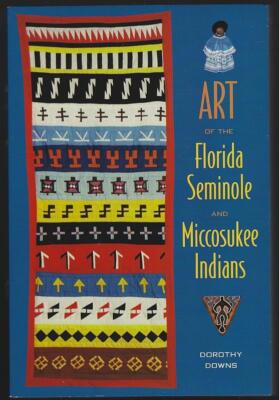 Art of the Florida Seminole and Miccosukee Indians
by
The artistic tradition that in the past sustained Florida Indians helps identify them today as possessing a resilient, modern culture. In this account of the arts and crafts of the Florida Seminole and Miccosukee Indians, the author shows how artistic expression reflects and inspires history.
Art of the Florida Seminole and Miccosukee Indians
by
The artistic tradition that in the past sustained Florida Indians helps identify them today as possessing a resilient, modern culture. In this account of the arts and crafts of the Florida Seminole and Miccosukee Indians, the author shows how artistic expression reflects and inspires history.
 The Arts of the North American Indian
by
Fourteen authorities explore sociology, anthropology, art history of Native creativity. Dazzling illustrations.
The Arts of the North American Indian
by
Fourteen authorities explore sociology, anthropology, art history of Native creativity. Dazzling illustrations.
 Changing Hands
by
The first in a landmark series of three titles that assembles, documents, interprets and explores the rich diversity of craft, art and design being produced today by contemporary Native American artists. This first volume, on Native American art from the Southwest, includes works in a wide variety of media by approximately 90 artists.
Changing Hands
by
The first in a landmark series of three titles that assembles, documents, interprets and explores the rich diversity of craft, art and design being produced today by contemporary Native American artists. This first volume, on Native American art from the Southwest, includes works in a wide variety of media by approximately 90 artists.
 Contemporary Native American Artists
by
Profiles over 1,000 Native American artists who are blazing new trails in the ancient arts.
Contemporary Native American Artists
by
Profiles over 1,000 Native American artists who are blazing new trails in the ancient arts.
 Crow Indian Rock Art
by
This absorbing volume examines the cultural role of rock art for the Aps#65533;alooke, or Crow, people of the northern Great Plains. Their extensive rock art developed within the changing cultural life of the tribe. Individual knowledge and meaning of rock art panels, however, relies as much on collective concepts of landscape as it does on shared memories of historic Crow culture. Using this idea as a focus, this book: -introduces Plains Indian rock art of the 19th century as we know about it from its own stylistic conventions, ethnographic data, and historical accounts; -investigates the contemporary Crow discourse about rock art and its place within the cultural landscape and archaeological record; -argues that cultural concepts of space and place are fundamental to the way rock art is discussed, experienced and interpreted.
Crow Indian Rock Art
by
This absorbing volume examines the cultural role of rock art for the Aps#65533;alooke, or Crow, people of the northern Great Plains. Their extensive rock art developed within the changing cultural life of the tribe. Individual knowledge and meaning of rock art panels, however, relies as much on collective concepts of landscape as it does on shared memories of historic Crow culture. Using this idea as a focus, this book: -introduces Plains Indian rock art of the 19th century as we know about it from its own stylistic conventions, ethnographic data, and historical accounts; -investigates the contemporary Crow discourse about rock art and its place within the cultural landscape and archaeological record; -argues that cultural concepts of space and place are fundamental to the way rock art is discussed, experienced and interpreted.
 Hearts of Our People
by
Hearts of Our People: Native Women Artists explores the artistic achievements of Native women and establishes their rightful place in the art world. This landmark book includes works of art from antiquity to the present, made in a variety of media from textiles and beadwork to video and digital arts. It showcases artists from more than seventy-five Indigenous tribes to reveal the ingenuity and innovation that have always been foundational to the art of Native women. Women have long been the creative force behind Native art. Hearts of Our People accompanies the first major exhibition of artwork by Native women, presented in close cooperation with top Native women artists and scholars, honoring the achievements of over 115 artists from the United States and Canada spanning over 1,000 years. Their triumphs--from pottery, textiles, and painting, to photographic portraits, to a gleaming El Camino--show astonishing innovation and technical mastery. Beautifully illustrated and enriched by the personal reflections, historical research, and artistic insights of leading scholars and artists in the field, Hearts of Our People: Native Women Artists pays tribute to the vital role and creative force of Native women artists, now and throughout time.
Hearts of Our People
by
Hearts of Our People: Native Women Artists explores the artistic achievements of Native women and establishes their rightful place in the art world. This landmark book includes works of art from antiquity to the present, made in a variety of media from textiles and beadwork to video and digital arts. It showcases artists from more than seventy-five Indigenous tribes to reveal the ingenuity and innovation that have always been foundational to the art of Native women. Women have long been the creative force behind Native art. Hearts of Our People accompanies the first major exhibition of artwork by Native women, presented in close cooperation with top Native women artists and scholars, honoring the achievements of over 115 artists from the United States and Canada spanning over 1,000 years. Their triumphs--from pottery, textiles, and painting, to photographic portraits, to a gleaming El Camino--show astonishing innovation and technical mastery. Beautifully illustrated and enriched by the personal reflections, historical research, and artistic insights of leading scholars and artists in the field, Hearts of Our People: Native Women Artists pays tribute to the vital role and creative force of Native women artists, now and throughout time.
 Hero, Hawk, and Open Hand
by
Along the Ohio, Tennessee, and Mississippi Rivers, the archaeological remains of earthen pyramids, plazas, large communities, and works of art and artifacts testify to Native American civilizations that thrived there between 3000 B.C. and A.D. 1500. This fascinating book presents exciting new information on the art and cultures of these ancient peoples and features hundreds of gorgeous photographs of important artworks, artifacts, and ritual objects excavated from Amerindian archaeological sites. Drawing on excavation findings and extensive research, the contributors to the book document a succession of distinct ancient populations in the pre-Columbian world of the American Midwest and Southeast. A team of interdisciplinary scholars examines the connections between archaeological remains of different regions and the themes, forms, and rituals that continue in specific tribes of today. The book also includes the personal reflections of contemporary Native Americans who discuss their perspectives on the significance of the fascinating and beautiful prehistoric artifacts as well as their own cultural practices today.
Hero, Hawk, and Open Hand
by
Along the Ohio, Tennessee, and Mississippi Rivers, the archaeological remains of earthen pyramids, plazas, large communities, and works of art and artifacts testify to Native American civilizations that thrived there between 3000 B.C. and A.D. 1500. This fascinating book presents exciting new information on the art and cultures of these ancient peoples and features hundreds of gorgeous photographs of important artworks, artifacts, and ritual objects excavated from Amerindian archaeological sites. Drawing on excavation findings and extensive research, the contributors to the book document a succession of distinct ancient populations in the pre-Columbian world of the American Midwest and Southeast. A team of interdisciplinary scholars examines the connections between archaeological remains of different regions and the themes, forms, and rituals that continue in specific tribes of today. The book also includes the personal reflections of contemporary Native Americans who discuss their perspectives on the significance of the fascinating and beautiful prehistoric artifacts as well as their own cultural practices today.
 Indian art of the northern plains : an exhibition
by
Indian art of the northern plains : an exhibition
by
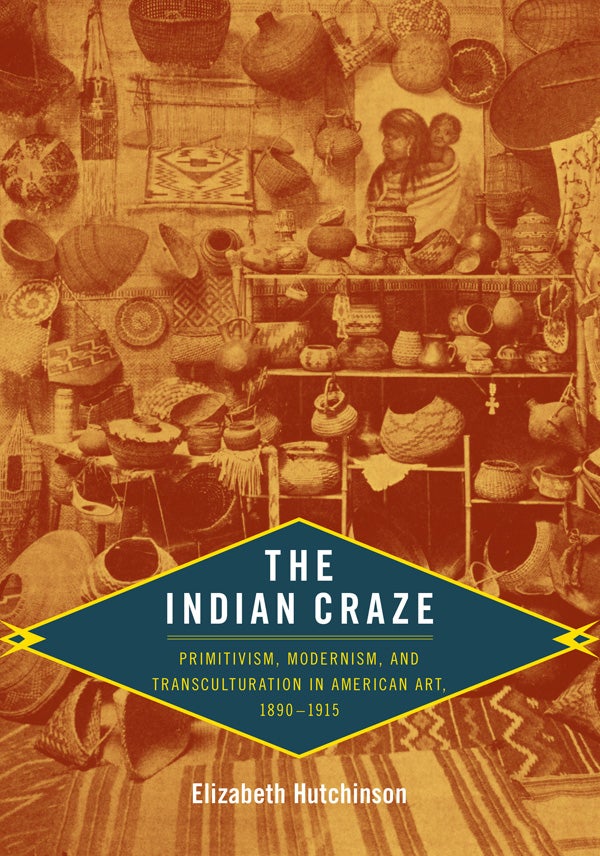 The Indian Craze : Primitivism, Modernism, and Transculturation in American Art, 1890-1915
by
In the early twentieth century, Native American baskets, blankets, and bowls could be purchased from department stores, "Indian stores," dealers, and the U.S. government's Indian schools. Men and women across the United States indulged in a widespread passion for collecting Native American art, which they displayed in domestic nooks called "Indian corners." Elizabeth Hutchinson identifies this collecting as part of a larger "Indian craze" and links it to other activities such as the inclusion of Native American artifacts in art exhibitions sponsored by museums, arts and crafts societies, and World's Fairs, and the use of indigenous handicrafts as models for non-Native artists exploring formal abstraction and emerging notions of artistic subjectivity. She argues that the Indian craze convinced policymakers that art was an aspect of "traditional" Native culture worth preserving, an attitude that continues to influence popular attitudes and federal legislation. Illustrating her argument with images culled from late-nineteenth- and early-twentieth-century publications, Hutchinson revises the standard history of the mainstream interest in Native American material culture as "art." While many locate the development of this cross-cultural interest in the Southwest after the First World War, Hutchinson reveals that it began earlier and spread across the nation from west to east and from reservation to metropolis. She demonstrates that artists, teachers, and critics associated with the development of American modernism, including Arthur Wesley Dow and Gertrude Käsebier, were inspired by Native art. Native artists were also able to achieve some recognition as modern artists, as Hutchinson shows through her discussion of the Winnebago painter and educator Angel DeCora. By taking a transcultural approach, Hutchinson transforms our understanding of the role of Native Americans in modernist culture.
The Indian Craze : Primitivism, Modernism, and Transculturation in American Art, 1890-1915
by
In the early twentieth century, Native American baskets, blankets, and bowls could be purchased from department stores, "Indian stores," dealers, and the U.S. government's Indian schools. Men and women across the United States indulged in a widespread passion for collecting Native American art, which they displayed in domestic nooks called "Indian corners." Elizabeth Hutchinson identifies this collecting as part of a larger "Indian craze" and links it to other activities such as the inclusion of Native American artifacts in art exhibitions sponsored by museums, arts and crafts societies, and World's Fairs, and the use of indigenous handicrafts as models for non-Native artists exploring formal abstraction and emerging notions of artistic subjectivity. She argues that the Indian craze convinced policymakers that art was an aspect of "traditional" Native culture worth preserving, an attitude that continues to influence popular attitudes and federal legislation. Illustrating her argument with images culled from late-nineteenth- and early-twentieth-century publications, Hutchinson revises the standard history of the mainstream interest in Native American material culture as "art." While many locate the development of this cross-cultural interest in the Southwest after the First World War, Hutchinson reveals that it began earlier and spread across the nation from west to east and from reservation to metropolis. She demonstrates that artists, teachers, and critics associated with the development of American modernism, including Arthur Wesley Dow and Gertrude Käsebier, were inspired by Native art. Native artists were also able to achieve some recognition as modern artists, as Hutchinson shows through her discussion of the Winnebago painter and educator Angel DeCora. By taking a transcultural approach, Hutchinson transforms our understanding of the role of Native Americans in modernist culture.
 In the Spirit of Mother Earth
by
"To Native Americans, nature and art are undeniably interwined. Creating a work of art - or even a tool or weapon - meant paying reverence to the cosmic forces of the Earth's spirit. With over 100 color photographs, In The Spirit Of Mother Earth shows how nature has influenced the exquisite handiwork of Native American people through the ages." "Divided by region, this book looks back in time to show us how the once-abundant resources inspired images of whales and bears in the crafts of such tribes as the Tlingit, Makah, and Chinook; how the wide-open skies and huge herds of buffalo became common motifs in Plains Indian art; and how the mountains, rivers, and vast woods of the East appeared in masks and other carvings of the Mohawk, Iroquois, and other Woodland tribes. What these people knew, and what was sadly overlooked by invading European cultures, is that harmony comes from respecting nature, not taking from her."--BOOK JACKET.Title Summary field provided by Blackwell North America, Inc. All Rights Reserved
In the Spirit of Mother Earth
by
"To Native Americans, nature and art are undeniably interwined. Creating a work of art - or even a tool or weapon - meant paying reverence to the cosmic forces of the Earth's spirit. With over 100 color photographs, In The Spirit Of Mother Earth shows how nature has influenced the exquisite handiwork of Native American people through the ages." "Divided by region, this book looks back in time to show us how the once-abundant resources inspired images of whales and bears in the crafts of such tribes as the Tlingit, Makah, and Chinook; how the wide-open skies and huge herds of buffalo became common motifs in Plains Indian art; and how the mountains, rivers, and vast woods of the East appeared in masks and other carvings of the Mohawk, Iroquois, and other Woodland tribes. What these people knew, and what was sadly overlooked by invading European cultures, is that harmony comes from respecting nature, not taking from her."--BOOK JACKET.Title Summary field provided by Blackwell North America, Inc. All Rights Reserved
 Inventing the Southwest
by
This book is the story of the people and places of the Fred Harvey Company, which together with the Santa Fe Railway helped to bring about the craze for Native American arts and crafts that remains today Based on an exhibit of the Heard Museum.
Inventing the Southwest
by
This book is the story of the people and places of the Fred Harvey Company, which together with the Santa Fe Railway helped to bring about the craze for Native American arts and crafts that remains today Based on an exhibit of the Heard Museum.
 Iroquoisart
by
This volume brings together contemporary works by 27 major Iroquois artists from the U.S. and Canada whose thriving and varied tradition of creative expression is less well known than that of the Northwest Coast or the Southwest. Contemporary Iroquois artists express themselves in a great variety of media and styles, while emphasizing their Native identity in relation to Western society. The artists' own comments on their work are supplemented by interpretive essays based on extensive interviews with the artists. Other essays by Iroquois and European authors reflect on aspects of Iroquois art, its historical development, and its cultural background.
Iroquoisart
by
This volume brings together contemporary works by 27 major Iroquois artists from the U.S. and Canada whose thriving and varied tradition of creative expression is less well known than that of the Northwest Coast or the Southwest. Contemporary Iroquois artists express themselves in a great variety of media and styles, while emphasizing their Native identity in relation to Western society. The artists' own comments on their work are supplemented by interpretive essays based on extensive interviews with the artists. Other essays by Iroquois and European authors reflect on aspects of Iroquois art, its historical development, and its cultural background.
 Josephine Foard and the Glazed Pottery of Laguna Pueblo
by
This fascinating rediscovery of Josephine Foard highlights her work at Laguna Pueblo beginning in 1899 and her efforts to improve and market pueblo pottery for the Lagunas' economic benefit.
Josephine Foard and the Glazed Pottery of Laguna Pueblo
by
This fascinating rediscovery of Josephine Foard highlights her work at Laguna Pueblo beginning in 1899 and her efforts to improve and market pueblo pottery for the Lagunas' economic benefit.
 Kiowa and Pueblo Art
by
The long and venerable tradition of Native American art began with rock and cave paintings as well as decorated objects for ritual and everyday use. Toward the end of the nineteenth century, Native American artists turned in a new direction by painting and drawing on paper. This volume recaptures a culture's transitional era with a remarkable series of watercolors. Created in the 1920s by artists of the American Southwest, these colorful images offer authentic views of a dynamic society and its captivating traditions. A vital preservation of Native American culture and art, this collection began with a French publisher's series of hand-colored reproductions, issued in limited-edition portfolios. Painstakingly reproduced from the now-rare originals, this new edition presents the first two portfolios together for the first time. Kiowa Indian Art (1929), featuring works by the internationally renowned Kiowa Five, and Pueblo Indian Painting (1932) depict scenes from ritual and social life--the dramatic snake dance, a wedding ceremony, warriors on horseback, and a family portrait, in addition to images of the thunderbird, the plumed serpent, and other mythological creatures. A new introduction by J. J. Brody, a leading authority on Native American art, complements the 81 full-page color plates.
Kiowa and Pueblo Art
by
The long and venerable tradition of Native American art began with rock and cave paintings as well as decorated objects for ritual and everyday use. Toward the end of the nineteenth century, Native American artists turned in a new direction by painting and drawing on paper. This volume recaptures a culture's transitional era with a remarkable series of watercolors. Created in the 1920s by artists of the American Southwest, these colorful images offer authentic views of a dynamic society and its captivating traditions. A vital preservation of Native American culture and art, this collection began with a French publisher's series of hand-colored reproductions, issued in limited-edition portfolios. Painstakingly reproduced from the now-rare originals, this new edition presents the first two portfolios together for the first time. Kiowa Indian Art (1929), featuring works by the internationally renowned Kiowa Five, and Pueblo Indian Painting (1932) depict scenes from ritual and social life--the dramatic snake dance, a wedding ceremony, warriors on horseback, and a family portrait, in addition to images of the thunderbird, the plumed serpent, and other mythological creatures. A new introduction by J. J. Brody, a leading authority on Native American art, complements the 81 full-page color plates.
 Migrations
by
The University of New Mexico's Tamarind Institute is a world-renowned center for fine art lithography dedicated to training master printers and providing a professional studio for artists. In Migrations, Tamarind director Marjorie Devon has compiled the work of six Native American artists, each of whom collaborated with professional printers at Tamarind and at Crow's Shadow Institute of the Arts in Pendleton, Oregon, to create prints. These artists were selected because they engage in contemporary art rather than what is traditionally considered "Native American art." Artists Steven Deo (Creek/Euchee), Tom Jones (Ho Chunk), Larry McNeil (Tlingit/Nisgaa), Ryan Lee Smith (Cherokee), Star Wallowing Bull (Chippewa/Arapaho), and Marie Watt (Seneca) represent a wide spectrum of Native American cultures and experiences. In addition to the art, essays by Jo Ortel, Lucy Lippard, Kathleen Howe, and Gerald McMaster contribute expert analyses of Native American art. Ortel, an associate professor of art history at Beloit College, defines "Migrations" as it applies to this project. Lippard is an art critic and author whose essay discusses the cultural baggage forced upon the American Indian. As director of the Pomona College Museum of Art and professor of art history, Howe offers an overview of Tamarind Institute's projects with indigenous peoples. A Plains Cree artist, McMaster's essay details the history of Crow's Shadow Institute on Oregon's Umatilla Reservation. A traveling exhibition of the art contained here, also entitled "Migrations," will begin in 2007, venues to be announced.
Migrations
by
The University of New Mexico's Tamarind Institute is a world-renowned center for fine art lithography dedicated to training master printers and providing a professional studio for artists. In Migrations, Tamarind director Marjorie Devon has compiled the work of six Native American artists, each of whom collaborated with professional printers at Tamarind and at Crow's Shadow Institute of the Arts in Pendleton, Oregon, to create prints. These artists were selected because they engage in contemporary art rather than what is traditionally considered "Native American art." Artists Steven Deo (Creek/Euchee), Tom Jones (Ho Chunk), Larry McNeil (Tlingit/Nisgaa), Ryan Lee Smith (Cherokee), Star Wallowing Bull (Chippewa/Arapaho), and Marie Watt (Seneca) represent a wide spectrum of Native American cultures and experiences. In addition to the art, essays by Jo Ortel, Lucy Lippard, Kathleen Howe, and Gerald McMaster contribute expert analyses of Native American art. Ortel, an associate professor of art history at Beloit College, defines "Migrations" as it applies to this project. Lippard is an art critic and author whose essay discusses the cultural baggage forced upon the American Indian. As director of the Pomona College Museum of Art and professor of art history, Howe offers an overview of Tamarind Institute's projects with indigenous peoples. A Plains Cree artist, McMaster's essay details the history of Crow's Shadow Institute on Oregon's Umatilla Reservation. A traveling exhibition of the art contained here, also entitled "Migrations," will begin in 2007, venues to be announced.
 Murals in the round : painted tipis of the Kiowa and Kiowa-Apache Indians : an exhibition of tipi models made for James Mooney of the Smithsonian Institution during his field studies of Indian history and art in southwestern Oklahoma, 1891-1904
by
Murals in the round : painted tipis of the Kiowa and Kiowa-Apache Indians : an exhibition of tipi models made for James Mooney of the Smithsonian Institution during his field studies of Indian history and art in southwestern Oklahoma, 1891-1904
by
 Native America
by
Shows and describes native American textiles, pottery, jewelry, baskets, beadwork, carvings, and clothing.
Native America
by
Shows and describes native American textiles, pottery, jewelry, baskets, beadwork, carvings, and clothing.
 Native American Art in the Twentieth Century
by
This illuminating and provocative book is the first anthology devoted to Twentieth Century Native American and First Nation art. Native American Art brings together anthropologists, art historians, curators, critics and distinguished Native artists to discuss pottery, painitng, sculpture, printmaking, photography and performance art by some of the most celebrated Native American and Canadian First Nation artists of our time The contributors use new theoretical and critical approaches to address key issues for Native American art, including symbolism and spirituality, the role of patronage and musuem practices, the politics of art criticism and the aesthetic power of indigenous knowledge. The artist contributors, who represent several Native nations - including Cherokee, Lakota, Plains Cree, and those of the PLateau country - emphasise the importance of traditional stories, myhtologies and ceremonies in the production of comtemporary art. Within great poignancy, thye write about recent art in terms of home, homeland and aboriginal sovereignty Tracing the continued resistance of Native artists to dominant orthodoxies of the art market and art history, Native American Art in the Twentieth Century argues forcefully for Native art's place in modern art history.
Native American Art in the Twentieth Century
by
This illuminating and provocative book is the first anthology devoted to Twentieth Century Native American and First Nation art. Native American Art brings together anthropologists, art historians, curators, critics and distinguished Native artists to discuss pottery, painitng, sculpture, printmaking, photography and performance art by some of the most celebrated Native American and Canadian First Nation artists of our time The contributors use new theoretical and critical approaches to address key issues for Native American art, including symbolism and spirituality, the role of patronage and musuem practices, the politics of art criticism and the aesthetic power of indigenous knowledge. The artist contributors, who represent several Native nations - including Cherokee, Lakota, Plains Cree, and those of the PLateau country - emphasise the importance of traditional stories, myhtologies and ceremonies in the production of comtemporary art. Within great poignancy, thye write about recent art in terms of home, homeland and aboriginal sovereignty Tracing the continued resistance of Native artists to dominant orthodoxies of the art market and art history, Native American Art in the Twentieth Century argues forcefully for Native art's place in modern art history.
 Native Arts of North America
by
"The tipi, the feather headdress and the pipe of peace: such are the cliches representatives of a culture often confined to anecdotal notice for its 'crafts'. This volume takes us beyond all that. Archaeology, costume, weaving, pottery, basket making, painting and sculpture are all addressed here. The sculptural quality of the articles presented, their purity of line and expressive intensity, command the status of art. Penney's vivid account defines their spiritual and symbolic import." "Colour reproductions from the greatest US collections of Amerindian art are accompanied by period black and white photographs situating the various Indian cultures in their historic contexts."--BOOK JACKET.Title Summary field provided by Blackwell North America, Inc. All Rights Reserved
Native Arts of North America
by
"The tipi, the feather headdress and the pipe of peace: such are the cliches representatives of a culture often confined to anecdotal notice for its 'crafts'. This volume takes us beyond all that. Archaeology, costume, weaving, pottery, basket making, painting and sculpture are all addressed here. The sculptural quality of the articles presented, their purity of line and expressive intensity, command the status of art. Penney's vivid account defines their spiritual and symbolic import." "Colour reproductions from the greatest US collections of Amerindian art are accompanied by period black and white photographs situating the various Indian cultures in their historic contexts."--BOOK JACKET.Title Summary field provided by Blackwell North America, Inc. All Rights Reserved
 Oneida Iroquois: Folklore, Myth, and History
by
This is the first major book to explore uniquely Haudenosaunee (Iroquois), and specifically Oneida, components in the Native American oral narrative as it existed around 1900. Even as Anthony Wonderley studies time-honored themes and such stories as the Haudenosaunee account of creation, he breaks new ground examining links between legend, history, and everyday life. Wonderley examines how oral traditions are born and develop. Uncovering tales told over the course of 400 years, Wonderley further defines and considers endurance and sequence in oral narratives and explores possible links between Oneida folklore and material culture. Arguably the most complete study of its kind, the book will appeal to a wide range of professional disciplines from anthropology, history, and folklore to religion and Native American studies.
Oneida Iroquois: Folklore, Myth, and History
by
This is the first major book to explore uniquely Haudenosaunee (Iroquois), and specifically Oneida, components in the Native American oral narrative as it existed around 1900. Even as Anthony Wonderley studies time-honored themes and such stories as the Haudenosaunee account of creation, he breaks new ground examining links between legend, history, and everyday life. Wonderley examines how oral traditions are born and develop. Uncovering tales told over the course of 400 years, Wonderley further defines and considers endurance and sequence in oral narratives and explores possible links between Oneida folklore and material culture. Arguably the most complete study of its kind, the book will appeal to a wide range of professional disciplines from anthropology, history, and folklore to religion and Native American studies.
 Place, nations, generations, beings : 200 years of Indigenous North American art
by
Place, nations, generations, beings : 200 years of Indigenous North American art
by
 Plains Indian Drawings 1865-1935
by
The Plains Indians of North America have a long tradition of chronicling their lives pictorially, but in the mid-19th century, as a result of increased contact with soldiers and settlers moving west, they acquired a new medium for their visual histories. Using pen, pencil and watercolour, they began to draw in the bound ledgers commonly used for inventory by traders and military officers.
Plains Indian Drawings 1865-1935
by
The Plains Indians of North America have a long tradition of chronicling their lives pictorially, but in the mid-19th century, as a result of increased contact with soldiers and settlers moving west, they acquired a new medium for their visual histories. Using pen, pencil and watercolour, they began to draw in the bound ledgers commonly used for inventory by traders and military officers.
 A Song to the Creator
by
Among Native American Plateau people, women are important culture bearers, responsible for passing spiritual values from one generation to the next by many means, including manual art forms, stories, and songs. This book explores each of the Plateau arts by means of Native American legends and poems, articles by various scholars, and interviews with Native American women artists.
A Song to the Creator
by
Among Native American Plateau people, women are important culture bearers, responsible for passing spiritual values from one generation to the next by many means, including manual art forms, stories, and songs. This book explores each of the Plateau arts by means of Native American legends and poems, articles by various scholars, and interviews with Native American women artists.
 The Spirit of Native America
by
Art and religion are two words that have no equivalents in languages spoken by Native Americans. Yet these intensely spiritual people created objects for everyday use that are unsurpassed for sheer beauty, originality, and craftsmanship. The Spirit of Native America explains this apparent contradiction in language as rich in symbolism as the art itself. Stunning full-color photography augments the text, yielding a new perspective on this often misunderstood facet of Native American culture.
The Spirit of Native America
by
Art and religion are two words that have no equivalents in languages spoken by Native Americans. Yet these intensely spiritual people created objects for everyday use that are unsurpassed for sheer beauty, originality, and craftsmanship. The Spirit of Native America explains this apparent contradiction in language as rich in symbolism as the art itself. Stunning full-color photography augments the text, yielding a new perspective on this often misunderstood facet of Native American culture.
 Women and Ledger Art
by
Ledger art has traditionally been created by men to recount the lives of male warriors on the Plains. During the past forty years, this form has been adopted by Native female artists, who are turning previously untold stories of women's lifestyles and achievements into ledger-style pictures. While there has been a resurgence of interest in ledger art, little has been written about these women ledger artists. Women and Ledger Art calls attention to the extraordinary achievements of these strong women who have chosen to express themselves through ledger art. Author Richard Pearce foregrounds these contributions by focusing on four contemporary women ledger artists: Sharron Ahtone Harjo (Kiowa), Colleen Cutschall (Oglala Lakota), Linda Haukaas (Sicangu Lakota), and Dolores Purdy Corcoran (Caddo). Pearce spent six years in continual communication with the women, learning about their work and their lives. Women and Ledger Art examines the artists and explains how they expanded Plains Indian history. With 46 stunning images of works in various mediums--from traditional forms on recovered ledger pages to simulated quillwork and sculpture, Women and Ledger Art reflects the new life these women have brought to an important transcultural form of expression.
Women and Ledger Art
by
Ledger art has traditionally been created by men to recount the lives of male warriors on the Plains. During the past forty years, this form has been adopted by Native female artists, who are turning previously untold stories of women's lifestyles and achievements into ledger-style pictures. While there has been a resurgence of interest in ledger art, little has been written about these women ledger artists. Women and Ledger Art calls attention to the extraordinary achievements of these strong women who have chosen to express themselves through ledger art. Author Richard Pearce foregrounds these contributions by focusing on four contemporary women ledger artists: Sharron Ahtone Harjo (Kiowa), Colleen Cutschall (Oglala Lakota), Linda Haukaas (Sicangu Lakota), and Dolores Purdy Corcoran (Caddo). Pearce spent six years in continual communication with the women, learning about their work and their lives. Women and Ledger Art examines the artists and explains how they expanded Plains Indian history. With 46 stunning images of works in various mediums--from traditional forms on recovered ledger pages to simulated quillwork and sculpture, Women and Ledger Art reflects the new life these women have brought to an important transcultural form of expression.
 Contemporary Native American Architecture
by
The Student's Book contains three authentic Cambridge Starters papers. These colourful test papers contain engaging activities and attractive illustrations to motivate young learners at this level. They also provide an excellent opportunity for children, parents and teachers alike to familiarise themselves with the format of the test. A Starters Audio CD (which contains the listening sections of the tests) and a Starters Answer Booklet are also available separately.
Contemporary Native American Architecture
by
The Student's Book contains three authentic Cambridge Starters papers. These colourful test papers contain engaging activities and attractive illustrations to motivate young learners at this level. They also provide an excellent opportunity for children, parents and teachers alike to familiarise themselves with the format of the test. A Starters Audio CD (which contains the listening sections of the tests) and a Starters Answer Booklet are also available separately.
 Iroquois
by
An authoritative illustrated study of the People of the Longhouse. In this handsome book, Michael G. Johnson, the author of the award-winning Encyclopedia of Native American Tribes and its companion, Arts and Crafts of the North American Tribes, looks at the people of the Iroquois Confederacy. The tribes were the Mohawk, Oneida, Cayuga, Onondaga, Seneca, and -- admitted into the Iroquois as a sixth nation by 1722 -- the Tuscarora. Iroquois: People of the Longhouse details their story up to the present day, when perhaps 50,000 people of Iroquois descent still live on, or near, their reserves in Canada and the U.S., with that many again living in cities. Rich with archival, contemporary and modern photographs, maps and illustrations, Iroquois: People of the Longhouse contains certainty: The Origins of the Iroquois Confederacy The Six Nations and Incorporated Tribes History 1500-1750 The French and Indian War 1754-1766 New Wars in the Old Northwest The American Revolution and the Aftermath Disintegration, Reformation and Perseverance 1783 to the Present Iroquois in the West Iroquois Social & Political Warfare Food and Flora Religion and Rituals Material Culture: Longhouses, Dress, Wampum, Masks, Decorative Art, Beadwork Important People in Six Nations History. An Iroquois gazetteer, bibliography and list of Iroquois reserves and reservations and their populations complete this authoritative reference.
Iroquois
by
An authoritative illustrated study of the People of the Longhouse. In this handsome book, Michael G. Johnson, the author of the award-winning Encyclopedia of Native American Tribes and its companion, Arts and Crafts of the North American Tribes, looks at the people of the Iroquois Confederacy. The tribes were the Mohawk, Oneida, Cayuga, Onondaga, Seneca, and -- admitted into the Iroquois as a sixth nation by 1722 -- the Tuscarora. Iroquois: People of the Longhouse details their story up to the present day, when perhaps 50,000 people of Iroquois descent still live on, or near, their reserves in Canada and the U.S., with that many again living in cities. Rich with archival, contemporary and modern photographs, maps and illustrations, Iroquois: People of the Longhouse contains certainty: The Origins of the Iroquois Confederacy The Six Nations and Incorporated Tribes History 1500-1750 The French and Indian War 1754-1766 New Wars in the Old Northwest The American Revolution and the Aftermath Disintegration, Reformation and Perseverance 1783 to the Present Iroquois in the West Iroquois Social & Political Warfare Food and Flora Religion and Rituals Material Culture: Longhouses, Dress, Wampum, Masks, Decorative Art, Beadwork Important People in Six Nations History. An Iroquois gazetteer, bibliography and list of Iroquois reserves and reservations and their populations complete this authoritative reference.
 Native American Architecture
by
Native American Architecture, is the first book-length, fully illustrated study of North American Indian architecture to appear in a century. The product of 15 years of research by an architect and an anthropologist, the book presents the building traditions of the major tribes in nine regional profiles covering the continent--from the huge, plank-house villages of the Northwest Coast to the Moundbuilder towns and temples of the Southeast to the Navajo hogans and adobe Pueblos of the Southwest. This innovative book is far more than a survey of buildings. Its multidisciplinary approach offers a broad, clear view of the Native American world, resulting in a new understanding of the meaning of their buildings and culture. Nabokov and Easton describe how Indian buildings, as a central element of their culture, were the symbolic summation of tribal activity, and how the settlements secured for their inhabitants a sense of "place" in the environment. Native American architecture, the authors write, must be defined as more than buildings, villages, or camps; the definition must include their use of space, their environment, their social mores, and their religious beliefs. The book thus introduces us to the ancient social customs, economic ways of life, and technological skills of each tribe, emphasizing the major role played by cosmological concepts and ritual life in their architectural systems. Each chapter concludes with an account of traditional Indian building practices under revival or in danger today. A visually exciting book using historical photographs and drawings, architectural renderings, and specially prepared interpretive diagrams which decode the sacred cosmology of the principal housetypes, Native American Architecture is a major contribution to the expanding worldwide interest in vernacular architecture--a milestone in scholarly investigation and cultural reconstruction.
Native American Architecture
by
Native American Architecture, is the first book-length, fully illustrated study of North American Indian architecture to appear in a century. The product of 15 years of research by an architect and an anthropologist, the book presents the building traditions of the major tribes in nine regional profiles covering the continent--from the huge, plank-house villages of the Northwest Coast to the Moundbuilder towns and temples of the Southeast to the Navajo hogans and adobe Pueblos of the Southwest. This innovative book is far more than a survey of buildings. Its multidisciplinary approach offers a broad, clear view of the Native American world, resulting in a new understanding of the meaning of their buildings and culture. Nabokov and Easton describe how Indian buildings, as a central element of their culture, were the symbolic summation of tribal activity, and how the settlements secured for their inhabitants a sense of "place" in the environment. Native American architecture, the authors write, must be defined as more than buildings, villages, or camps; the definition must include their use of space, their environment, their social mores, and their religious beliefs. The book thus introduces us to the ancient social customs, economic ways of life, and technological skills of each tribe, emphasizing the major role played by cosmological concepts and ritual life in their architectural systems. Each chapter concludes with an account of traditional Indian building practices under revival or in danger today. A visually exciting book using historical photographs and drawings, architectural renderings, and specially prepared interpretive diagrams which decode the sacred cosmology of the principal housetypes, Native American Architecture is a major contribution to the expanding worldwide interest in vernacular architecture--a milestone in scholarly investigation and cultural reconstruction.
 The Art of Native American Basketry
by
In recent years, Native American basketry has aroused the interest and admiration of individuals, from the scholar to the collector. It is a complex subject and offers an opportunity to study through time the various changes which transpired in its function, form and manufacture. Native American Basketry: A Living Legacy, by Frank W. Porter III, is the first major study of the subject since 1904, and presents a collection of essays written by those intimately familiar with the basket makers and basketry of North America. Illustrated with approximately 80 black-and-white photographs--many of which are historical records of basket makers and their baskets--Native American Basketry uses archaeological, ethnographic, historical and contemporary information in discussing the changes in native basketry from prehistoric times to the present. In spite of the wide range of habitats, as well as the social and cultural diversity of the basket-making tribes, it is surprising to discover the similar ways the basket makers adapted basketry after prolonged contact with nonIndian peoples. The book is especially well-suited not only for the scholar of American Indian art history, but cultural history as well.
The Art of Native American Basketry
by
In recent years, Native American basketry has aroused the interest and admiration of individuals, from the scholar to the collector. It is a complex subject and offers an opportunity to study through time the various changes which transpired in its function, form and manufacture. Native American Basketry: A Living Legacy, by Frank W. Porter III, is the first major study of the subject since 1904, and presents a collection of essays written by those intimately familiar with the basket makers and basketry of North America. Illustrated with approximately 80 black-and-white photographs--many of which are historical records of basket makers and their baskets--Native American Basketry uses archaeological, ethnographic, historical and contemporary information in discussing the changes in native basketry from prehistoric times to the present. In spite of the wide range of habitats, as well as the social and cultural diversity of the basket-making tribes, it is surprising to discover the similar ways the basket makers adapted basketry after prolonged contact with nonIndian peoples. The book is especially well-suited not only for the scholar of American Indian art history, but cultural history as well.
 Lucy M. Lewis
by
Describes the role of pottery making in Acoma culture, recounts the lives and careers of a leading potter and her family, and presents examples of her work.
Lucy M. Lewis
by
Describes the role of pottery making in Acoma culture, recounts the lives and careers of a leading potter and her family, and presents examples of her work.
 Maria Martinez : five generations of potters
by
Maria Martinez : five generations of potters
by
 White metal universe : Navajo Silver from the Fred Harvey Collection.
by
White metal universe : Navajo Silver from the Fred Harvey Collection.
by
 Dancing on Common Ground
by
Dance, a vital expression of community and spirituality for Native Americans, has been the traditional metaphor for resolving conflict among Southern Plains tribes. War, on the other hand, has been the metaphor for Anglo-Americans. Attacking conflicts in terms of dichotomies--us vs. them, friend vs. foe, civilized vs. savage--the European-influenced U.S. government has created battles out of almost every military, political, and social situation, from the Revolutionary War to the War on Drugs. Here lies a fundamental cultural difference, says Howard Meredith, that has led to mistrust, poor communication, frustration, and polarization. The Anglo-American assumption that analysis and argument are universal and permanent traits, he contends, is not only erroneous, but has proven detrimental, even devastating, for Native Americans who have not customarily shared those values. Historically, the U.S. government has tried to disintegrate tribes, alienate, assimilate, divide and conquer. And in the process, it has ignored the positive relationships the tribes had established among themselves and with their physical environment. Although conflicts have arisen among tribes, Meredith asserts, the Southern Plains peoples have spent the vast majority of their time in mutual support of one another rather than at war. The Wichita, Caddo, Comanche, Cheyenne, Kiowa, Apache, Arapaho, Delaware, and others brought together by choice or adversity achieved harmonious coexistence through imagination, mythology, art, dance, commerce, and conservation. In Dancing on Common Ground, Meredith uses tribal oral histories to describe alliances before the European infiltration and extensive archives, federal documents, and personal interviews to examine the evolution and attempted annihilation of native traditions through the past three centuries. Looking toward the future by assessing the past, he argues that the Southern Plains Indians need to re-establish self-determination, traditional practices and values, and their native languages to overcome the adverse effects of federal paternalism, strengthen tribal relations, and improve economic and social conditions for all people in the Southern Plains.
Dancing on Common Ground
by
Dance, a vital expression of community and spirituality for Native Americans, has been the traditional metaphor for resolving conflict among Southern Plains tribes. War, on the other hand, has been the metaphor for Anglo-Americans. Attacking conflicts in terms of dichotomies--us vs. them, friend vs. foe, civilized vs. savage--the European-influenced U.S. government has created battles out of almost every military, political, and social situation, from the Revolutionary War to the War on Drugs. Here lies a fundamental cultural difference, says Howard Meredith, that has led to mistrust, poor communication, frustration, and polarization. The Anglo-American assumption that analysis and argument are universal and permanent traits, he contends, is not only erroneous, but has proven detrimental, even devastating, for Native Americans who have not customarily shared those values. Historically, the U.S. government has tried to disintegrate tribes, alienate, assimilate, divide and conquer. And in the process, it has ignored the positive relationships the tribes had established among themselves and with their physical environment. Although conflicts have arisen among tribes, Meredith asserts, the Southern Plains peoples have spent the vast majority of their time in mutual support of one another rather than at war. The Wichita, Caddo, Comanche, Cheyenne, Kiowa, Apache, Arapaho, Delaware, and others brought together by choice or adversity achieved harmonious coexistence through imagination, mythology, art, dance, commerce, and conservation. In Dancing on Common Ground, Meredith uses tribal oral histories to describe alliances before the European infiltration and extensive archives, federal documents, and personal interviews to examine the evolution and attempted annihilation of native traditions through the past three centuries. Looking toward the future by assessing the past, he argues that the Southern Plains Indians need to re-establish self-determination, traditional practices and values, and their native languages to overcome the adverse effects of federal paternalism, strengthen tribal relations, and improve economic and social conditions for all people in the Southern Plains.
 Indigenous, traditional, and folk sports : contesting modernities
by
"This is the first book to focus on indigenous, traditional and folk sports and sporting cultures. It examines the significance of sporting cultures that have survived the emergence and diffusion of western sports and have carved out a unique position not only in spite of, but also in response to, modernity. Presenting case studies from around the world, including from Europe, Asia, Africa, the Americas and Oceania, the book draws on multi-disciplinary work from sociology, anthropology, history, cultural studies and political science, exploring key themes in the social sciences including nationalism, identity, decolonisation and gender. From Turkish oil wrestling, Kabbadi in South Asia and Iroquois lacrosse, to wushu and sumo in East Asia, these sporting practices continue to capture the indigenous imagination on the margins of the western hegemonic sport complex. Situated in the fissures between the local and the global, the archaic and the modern, and between ritual and record, they inhabit a liminal space of transformation as they assume new cultural and political meanings, offering important perspectives on the complexities, challenges and contradictions of modernity. This is fascinating reading for anybody with an interest in sport, indigenous studies, anthropology, social and cultural history, or globalisation"-- Provided by publisher.
Indigenous, traditional, and folk sports : contesting modernities
by
"This is the first book to focus on indigenous, traditional and folk sports and sporting cultures. It examines the significance of sporting cultures that have survived the emergence and diffusion of western sports and have carved out a unique position not only in spite of, but also in response to, modernity. Presenting case studies from around the world, including from Europe, Asia, Africa, the Americas and Oceania, the book draws on multi-disciplinary work from sociology, anthropology, history, cultural studies and political science, exploring key themes in the social sciences including nationalism, identity, decolonisation and gender. From Turkish oil wrestling, Kabbadi in South Asia and Iroquois lacrosse, to wushu and sumo in East Asia, these sporting practices continue to capture the indigenous imagination on the margins of the western hegemonic sport complex. Situated in the fissures between the local and the global, the archaic and the modern, and between ritual and record, they inhabit a liminal space of transformation as they assume new cultural and political meanings, offering important perspectives on the complexities, challenges and contradictions of modernity. This is fascinating reading for anybody with an interest in sport, indigenous studies, anthropology, social and cultural history, or globalisation"-- Provided by publisher.
 Encyclopedia of Native American Music of North America
by
This book is a one-stop reference resource for the vast variety of musical expressions of the First Peoples' cultures of North America, both past and present.Encyclopedia of Native American Music of North America documents the surprisingly varied musical practices among North America's First Peoples, both historically and in the modern context. It supplies a detailed yet accessible and approachable overview of the substantial contributions and influence of First Peoples that can be appreciated by both native and nonnative audiences, regardless of their familiarity with musical theory.The entries address how ethnomusicologists with Native American heritage are revolutionizing approaches to the discipline, and showcase how musicians with First Peoples' heritage are influencing modern musical forms including native flute, orchestral string playing, gospel, and hip hop. The work represents a much-needed academic study of First Peoples' musical cultures--a subject that is of growing interest to Native Americans as well as nonnative students and readers.
Encyclopedia of Native American Music of North America
by
This book is a one-stop reference resource for the vast variety of musical expressions of the First Peoples' cultures of North America, both past and present.Encyclopedia of Native American Music of North America documents the surprisingly varied musical practices among North America's First Peoples, both historically and in the modern context. It supplies a detailed yet accessible and approachable overview of the substantial contributions and influence of First Peoples that can be appreciated by both native and nonnative audiences, regardless of their familiarity with musical theory.The entries address how ethnomusicologists with Native American heritage are revolutionizing approaches to the discipline, and showcase how musicians with First Peoples' heritage are influencing modern musical forms including native flute, orchestral string playing, gospel, and hip hop. The work represents a much-needed academic study of First Peoples' musical cultures--a subject that is of growing interest to Native Americans as well as nonnative students and readers.
 Iroquois music and dance; ceremonial arts of two Seneca Longhouses
by
Iroquois music and dance; ceremonial arts of two Seneca Longhouses
by
 Native American Music in Eastern North America
by
Native American Music in Eastern North America, a case study in the Global Music Series edited by Bonnie Wade and Patricia Shehan Campbell, is one of the first books to explore the contemporary musical landscape of indigenous North Americans. This volume looks at how performance traditions of Native North Americans have been influenced by traditional social values and cultural histories, as well as by encounters with other indigenous groups and newcomers from Europe and Africa. Drawing on case studies from communities in eastern North America such as the Iroquois, the Algonquian -speaking nations of the Northeast, and the Inuit of the far north, this book discusses the specific histories and locations of Native North American musical practices including intertribal celebrations, contemporary popular music projects, and other expressive domains such as dance, art, and film. The author also looks at how performance contexts and styles have responded to economic, social, and environmental changes brought about by the arrival of non-natives, how technology has mediated contemporary cultural communication, and how traditional ideas about social roles and gender identities have been altered through music. Designed to be used as one of several short and inexpensive case study volumes in the Global Music Series, this volume is appropriate for undergraduate courses in world music or ethnomusicology and Native American anthropology. Based on the author's own fieldwork, the text features interviews with tribal elders and First Nations performers, eyewitness accounts of performances, and vivid illustrations. The included 70-minute CD contains examples of music discussed in the text; these include unique and rare recordings.
Native American Music in Eastern North America
by
Native American Music in Eastern North America, a case study in the Global Music Series edited by Bonnie Wade and Patricia Shehan Campbell, is one of the first books to explore the contemporary musical landscape of indigenous North Americans. This volume looks at how performance traditions of Native North Americans have been influenced by traditional social values and cultural histories, as well as by encounters with other indigenous groups and newcomers from Europe and Africa. Drawing on case studies from communities in eastern North America such as the Iroquois, the Algonquian -speaking nations of the Northeast, and the Inuit of the far north, this book discusses the specific histories and locations of Native North American musical practices including intertribal celebrations, contemporary popular music projects, and other expressive domains such as dance, art, and film. The author also looks at how performance contexts and styles have responded to economic, social, and environmental changes brought about by the arrival of non-natives, how technology has mediated contemporary cultural communication, and how traditional ideas about social roles and gender identities have been altered through music. Designed to be used as one of several short and inexpensive case study volumes in the Global Music Series, this volume is appropriate for undergraduate courses in world music or ethnomusicology and Native American anthropology. Based on the author's own fieldwork, the text features interviews with tribal elders and First Nations performers, eyewitness accounts of performances, and vivid illustrations. The included 70-minute CD contains examples of music discussed in the text; these include unique and rare recordings.
 When the Light of the World Was Subdued, Our Songs Came Through
by
United States Poet Laureate Joy Harjo gathers the work of more than 160 poets, representing nearly 100 indigenous nations, into one momentous volume. This landmark anthology celebrates the indigenous peoples of North America, the first poets of this country, whose literary traditions stretch back centuries. Opening with a blessing from Pulitzer Prize winner N. Scott Momaday, the book contains powerful introductions from contributing editors who represent the five geographically organized sections. Each section begins with a poem from the massive libraries of oral literatures and closes with emerging poets, ranging from Eleazar, a seventeenth-century Native student at Harvard, to Jake Skeets, a young Dinéh poet born in 1991, and including renowned writers such as Natalie Diaz, Tommy Pico, Layli Long Soldier, and Ray Young Bear. In When the Light of the World Was Subdued, Our Songs Came Through, Harjo offers the extraordinary sweep of Native literature.
When the Light of the World Was Subdued, Our Songs Came Through
by
United States Poet Laureate Joy Harjo gathers the work of more than 160 poets, representing nearly 100 indigenous nations, into one momentous volume. This landmark anthology celebrates the indigenous peoples of North America, the first poets of this country, whose literary traditions stretch back centuries. Opening with a blessing from Pulitzer Prize winner N. Scott Momaday, the book contains powerful introductions from contributing editors who represent the five geographically organized sections. Each section begins with a poem from the massive libraries of oral literatures and closes with emerging poets, ranging from Eleazar, a seventeenth-century Native student at Harvard, to Jake Skeets, a young Dinéh poet born in 1991, and including renowned writers such as Natalie Diaz, Tommy Pico, Layli Long Soldier, and Ray Young Bear. In When the Light of the World Was Subdued, Our Songs Came Through, Harjo offers the extraordinary sweep of Native literature.


