
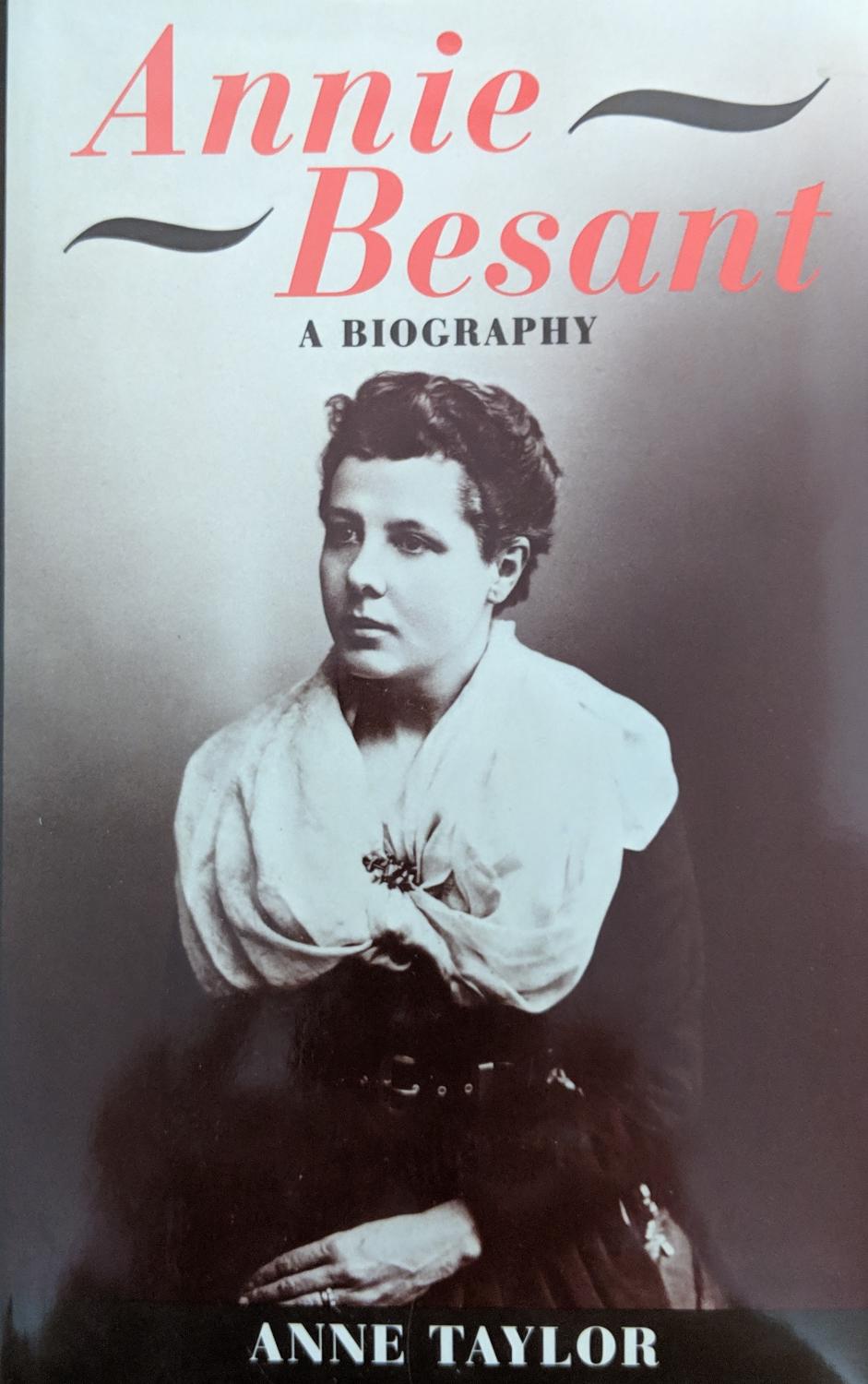
 Annie Besant
by
In her long life, Annie Besant embraced political, religious, and social causes with equal conviction and sincerity, courting ridicule and controversy by actively promoting unpopular ideas. At 26 she fled the shelter of marriage to an Anglican clergyman and renounced her religious upbringing by joining the National Secular Society. Under the influence of its president, Charles Bradlaugh, she wrote and lectured for the cause of Freethought, and in 1876, achieved nationwide fame by defending birth control in a public court. She converted to socialism and through her friendship with Bernard Shaw joined the Fabian Society. In 1888 Besant played a leading role in the Bryant and May match girls' strike and became Secretary of the trade union they founded. But by 1891 she had fallen out of sympathy with socialists and turned instead to Theosophy and its eccentric prophet, Madame Blavatsky. Thereafter she divided her life between England and the Theosophical Society's headquarters in India. She joined the Indian National Congress and was interned in 1917 for her passionate advocacy of Home Rule. In this, the first full-length biography of Annie Besant in thirty years, Taylor draws on previously unpublished letters to show that Besant was in love, not with Shaw, but with journalist W. Stead who rejected her advances. The book reveals for the first time the full extent of the Government of India's alarm at Besant's commanding position in the crisis of 1917, and her bid for political and religious power in India.
Annie Besant
by
In her long life, Annie Besant embraced political, religious, and social causes with equal conviction and sincerity, courting ridicule and controversy by actively promoting unpopular ideas. At 26 she fled the shelter of marriage to an Anglican clergyman and renounced her religious upbringing by joining the National Secular Society. Under the influence of its president, Charles Bradlaugh, she wrote and lectured for the cause of Freethought, and in 1876, achieved nationwide fame by defending birth control in a public court. She converted to socialism and through her friendship with Bernard Shaw joined the Fabian Society. In 1888 Besant played a leading role in the Bryant and May match girls' strike and became Secretary of the trade union they founded. But by 1891 she had fallen out of sympathy with socialists and turned instead to Theosophy and its eccentric prophet, Madame Blavatsky. Thereafter she divided her life between England and the Theosophical Society's headquarters in India. She joined the Indian National Congress and was interned in 1917 for her passionate advocacy of Home Rule. In this, the first full-length biography of Annie Besant in thirty years, Taylor draws on previously unpublished letters to show that Besant was in love, not with Shaw, but with journalist W. Stead who rejected her advances. The book reveals for the first time the full extent of the Government of India's alarm at Besant's commanding position in the crisis of 1917, and her bid for political and religious power in India.
 Cleopatra
by
The Pulitzer Prize-winning biographer brings to life the most intriguing woman in the history of the world: Cleopatra, the last queen of Egypt. Her palace shimmered with onyx, garnets, and gold, but was richer still in political and sexual intrigue. Above all else, Cleopatra was a shrewd strategist and an ingenious negotiator. Though her life spanned fewer than forty years, it reshaped the contours of the ancient world. She was married twice, each time to a brother. She waged a brutal civil war against the first when both were teenagers. She poisoned the second. Ultimately she dispensed with an ambitious sister as well; incest and assassination were family specialties. Cleopatra appears to have had sex with only two men. They happen, however, to have been Julius Caesar and Mark Antony, among the most prominent Romans of the day. Both were married to other women. Cleopatra had a child with Caesar and -- after his murder -- three more with his protégé. Already she was the wealthiest ruler in the Mediterranean; the relationship with Antony confirmed her status as the most influential woman of the age. The two would together attempt to forge a new empire, in an alliance that spelled their ends. Cleopatra has lodged herself in our imaginations ever since. Famous long before she was notorious, Cleopatra has gone down in history for all the wrong reasons. Shakespeare and Shaw put words in her mouth. Michelangelo, Tiepolo, and Elizabeth Taylor put a face to her name. Along the way, Cleopatra's supple personality and the drama of her circumstances have been lost. In a masterly return to the classical sources, Stacy Schiff here boldly separates fact from fiction to rescue the magnetic queen whose death ushered in a new world order. Rich in detail, epic in scope, Schiff 's is a luminous, deeply original reconstruction of a dazzling life.
Cleopatra
by
The Pulitzer Prize-winning biographer brings to life the most intriguing woman in the history of the world: Cleopatra, the last queen of Egypt. Her palace shimmered with onyx, garnets, and gold, but was richer still in political and sexual intrigue. Above all else, Cleopatra was a shrewd strategist and an ingenious negotiator. Though her life spanned fewer than forty years, it reshaped the contours of the ancient world. She was married twice, each time to a brother. She waged a brutal civil war against the first when both were teenagers. She poisoned the second. Ultimately she dispensed with an ambitious sister as well; incest and assassination were family specialties. Cleopatra appears to have had sex with only two men. They happen, however, to have been Julius Caesar and Mark Antony, among the most prominent Romans of the day. Both were married to other women. Cleopatra had a child with Caesar and -- after his murder -- three more with his protégé. Already she was the wealthiest ruler in the Mediterranean; the relationship with Antony confirmed her status as the most influential woman of the age. The two would together attempt to forge a new empire, in an alliance that spelled their ends. Cleopatra has lodged herself in our imaginations ever since. Famous long before she was notorious, Cleopatra has gone down in history for all the wrong reasons. Shakespeare and Shaw put words in her mouth. Michelangelo, Tiepolo, and Elizabeth Taylor put a face to her name. Along the way, Cleopatra's supple personality and the drama of her circumstances have been lost. In a masterly return to the classical sources, Stacy Schiff here boldly separates fact from fiction to rescue the magnetic queen whose death ushered in a new world order. Rich in detail, epic in scope, Schiff 's is a luminous, deeply original reconstruction of a dazzling life.
 D-Day Girls
by
NATIONAL BESTSELLER * The dramatic, untold history of the heroic women recruited by Britain's elite spy agency to help pave the way for Allied victory in World War II "Gripping. Spies, romance, Gestapo thugs, blown-up trains, courage, and treachery (lots of treachery)--and all of it true."--Erik Larson, author of The Devil in the White City and Dead Wake In 1942, the Allies were losing, Germany seemed unstoppable, and every able man in England was on the front lines. To "set Europe ablaze," in the words of Winston Churchill, the Special Operations Executive (SOE), whose spies were trained in everything from demolition to sharpshooting, was forced to do something unprecedented: recruit women. Thirty-nine answered the call, leaving their lives and families to become saboteurs in France. In D-Day Girls, Sarah Rose draws on recently declassified files, diaries, and oral histories to tell the thrilling story of three of these remarkable women. There's Andrée Borrel, a scrappy and streetwise Parisian who blew up power lines with the Gestapo hot on her heels; Odette Sansom, an unhappily married suburban mother who saw the SOE as her ticket out of domestic life and into a meaningful adventure; and Lise de Baissac, a fiercely independent member of French colonial high society and the SOE's unflappable "queen." Together, they destroyed train lines, ambushed Nazis, plotted prison breaks, and gathered crucial intelligence--laying the groundwork for the D-Day invasion that proved to be the turning point in the war. Rigorously researched and written with razor-sharp wit, D-Day Girls is an inspiring story for our own moment of resistance: a reminder of what courage--and the energy of politically animated women--can accomplish when the stakes seem incalculably high. Praise for D-Day Girls "Rigorously researched . . . [a] thriller in the form of a non-fiction book."--Refinery29 "Equal parts espionage-romance thriller and historical narrative, D-Day Girls traces the lives and secret activities of the 39 women who answered the call to infiltrate France. . . . While chronicling the James Bond-worthy missions and love affairs of these women, Rose vividly captures the broken landscape of war."--The Washington Post "Gripping history . . . thoroughly researched and written as smoothly as a good thriller, this is a mesmerizing story of creativity, perseverance, and astonishing heroism."--Publishers Weekly (starred review)
D-Day Girls
by
NATIONAL BESTSELLER * The dramatic, untold history of the heroic women recruited by Britain's elite spy agency to help pave the way for Allied victory in World War II "Gripping. Spies, romance, Gestapo thugs, blown-up trains, courage, and treachery (lots of treachery)--and all of it true."--Erik Larson, author of The Devil in the White City and Dead Wake In 1942, the Allies were losing, Germany seemed unstoppable, and every able man in England was on the front lines. To "set Europe ablaze," in the words of Winston Churchill, the Special Operations Executive (SOE), whose spies were trained in everything from demolition to sharpshooting, was forced to do something unprecedented: recruit women. Thirty-nine answered the call, leaving their lives and families to become saboteurs in France. In D-Day Girls, Sarah Rose draws on recently declassified files, diaries, and oral histories to tell the thrilling story of three of these remarkable women. There's Andrée Borrel, a scrappy and streetwise Parisian who blew up power lines with the Gestapo hot on her heels; Odette Sansom, an unhappily married suburban mother who saw the SOE as her ticket out of domestic life and into a meaningful adventure; and Lise de Baissac, a fiercely independent member of French colonial high society and the SOE's unflappable "queen." Together, they destroyed train lines, ambushed Nazis, plotted prison breaks, and gathered crucial intelligence--laying the groundwork for the D-Day invasion that proved to be the turning point in the war. Rigorously researched and written with razor-sharp wit, D-Day Girls is an inspiring story for our own moment of resistance: a reminder of what courage--and the energy of politically animated women--can accomplish when the stakes seem incalculably high. Praise for D-Day Girls "Rigorously researched . . . [a] thriller in the form of a non-fiction book."--Refinery29 "Equal parts espionage-romance thriller and historical narrative, D-Day Girls traces the lives and secret activities of the 39 women who answered the call to infiltrate France. . . . While chronicling the James Bond-worthy missions and love affairs of these women, Rose vividly captures the broken landscape of war."--The Washington Post "Gripping history . . . thoroughly researched and written as smoothly as a good thriller, this is a mesmerizing story of creativity, perseverance, and astonishing heroism."--Publishers Weekly (starred review)
 The Extra Woman
by
You've met the extra woman: she's sophisticated, she lives comfortably alone, she pursues her passions unabashedly, and--contrary to society's suspicions--she really is happy. Despite multiple waves of feminist revolution, today's single woman is still mired in judgment or, worse, pity. But for a brief, exclamatory period in the late 1930s, she was all the rage. A delicious cocktail of cultural history and literary biography, The Extra Woman transports us to the turbulent and transformative years between suffrage and the sixties, when, thanks to the glamorous grit of one Marjorie Hillis, single women boldly claimed and enjoyed their independence. Marjorie Hillis, pragmatic daughter of a Brooklyn preacher, was poised for reinvention when she moved to the big city to start a life of her own. Gone were the days of the flirty flapper; ladies of Depression-era New York embraced a new icon: the independent working woman. Hillis was already a success at Vogue when she published a radical self-help book in 1936: Live Alone and Like It: A Guide for the Extra Woman. With Dorothy Parker--esque wit, she urged spinsters, divorcées, and "old maids" to shed derogatory labels and take control of their lives, and her philosophy became a phenomenon. From the importance of a peignoir to the joy of breakfast in bed (alone), Hillis's tips made single life desirable and chic. In a style as irresistible as Hillis's own, Joanna Scutts, a leading cultural critic, explores the revolutionary years following the Live-Alone movement, when the status of these "brazen ladies" peaked and then collapsed. Other innovative lifestyle gurus set similar trends that celebrated guiltless female independence and pleasure: Dorothy Draper's interior design smash, Decorating Is Fun! transformed apartments; Irma Rombauer's warm and welcoming recipe book, The Joy of Cooking, reassured the nervous home chef that she, too, was capable of decadent culinary feats. By painting the wider picture, Scutts reveals just how influential Hillis's career was, spanning decades and numerous best sellers. As she refashioned her message with every life experience, Hillis proved that guts, grace, and perseverance would always be in vogue. With this vibrant examination of a remarkable life and profound feminist philosophy, Joanna Scutts at last reclaims Marjorie Hillis as the original queen of a maligned sisterhood. Channeling Hillis's charm, The Extra Woman is both a brilliant exposé of women who forged their independent paths before the domestic backlash of the 1950s trapped them behind picket fences, and an illuminating excursion into the joys of fashion, mixology, decorating, and other manifestations of shameless self-love.
The Extra Woman
by
You've met the extra woman: she's sophisticated, she lives comfortably alone, she pursues her passions unabashedly, and--contrary to society's suspicions--she really is happy. Despite multiple waves of feminist revolution, today's single woman is still mired in judgment or, worse, pity. But for a brief, exclamatory period in the late 1930s, she was all the rage. A delicious cocktail of cultural history and literary biography, The Extra Woman transports us to the turbulent and transformative years between suffrage and the sixties, when, thanks to the glamorous grit of one Marjorie Hillis, single women boldly claimed and enjoyed their independence. Marjorie Hillis, pragmatic daughter of a Brooklyn preacher, was poised for reinvention when she moved to the big city to start a life of her own. Gone were the days of the flirty flapper; ladies of Depression-era New York embraced a new icon: the independent working woman. Hillis was already a success at Vogue when she published a radical self-help book in 1936: Live Alone and Like It: A Guide for the Extra Woman. With Dorothy Parker--esque wit, she urged spinsters, divorcées, and "old maids" to shed derogatory labels and take control of their lives, and her philosophy became a phenomenon. From the importance of a peignoir to the joy of breakfast in bed (alone), Hillis's tips made single life desirable and chic. In a style as irresistible as Hillis's own, Joanna Scutts, a leading cultural critic, explores the revolutionary years following the Live-Alone movement, when the status of these "brazen ladies" peaked and then collapsed. Other innovative lifestyle gurus set similar trends that celebrated guiltless female independence and pleasure: Dorothy Draper's interior design smash, Decorating Is Fun! transformed apartments; Irma Rombauer's warm and welcoming recipe book, The Joy of Cooking, reassured the nervous home chef that she, too, was capable of decadent culinary feats. By painting the wider picture, Scutts reveals just how influential Hillis's career was, spanning decades and numerous best sellers. As she refashioned her message with every life experience, Hillis proved that guts, grace, and perseverance would always be in vogue. With this vibrant examination of a remarkable life and profound feminist philosophy, Joanna Scutts at last reclaims Marjorie Hillis as the original queen of a maligned sisterhood. Channeling Hillis's charm, The Extra Woman is both a brilliant exposé of women who forged their independent paths before the domestic backlash of the 1950s trapped them behind picket fences, and an illuminating excursion into the joys of fashion, mixology, decorating, and other manifestations of shameless self-love.
 First Women
by
From the #1 New York Times bestselling author of the groundbreaking backstairs look at the White House, The Residence, comes an intimate, news-making look at the true modern power brokers at 1600 Pennsylvania Avenue: the First Ladies, from Jackie Kennedy to Michelle Obama and Melania Trump. One of the most underestimated--and challenging--positions in the world, the First Lady of the United States must be many things: an inspiring leader with a forward-thinking agenda of her own; a savvy politician, skilled at navigating the treacherous rapids of Washington; a wife and mother operating under constant scrutiny; and an able CEO responsible for the smooth operation of countless services and special events at the White House. Now, as she did in her smash #1 bestseller The Residence, former White House correspondent Kate Andersen Brower draws on a wide array of untapped, candid sources--from residence staff and social secretaries to friends and political advisers--to tell the stories of the ten remarkable women who have defined that role since 1960. Brower offers new insights into this privileged group of remarkable women, including Jacqueline Kennedy, Lady Bird Johnson, Patricia Nixon, Betty Ford, Rosalynn Carter, Nancy Reagan, Barbara Bush, Hillary Clinton, Laura Bush, and Michelle Obama. The stories she shares range from the heartwarming to the shocking and tragic, exploring everything from the first ladies' political crusades to their rivalries with Washington figures; from their friendships with other first ladies to their public and private relationships with their husbands. She also offers insight as to what Melania Trump might hope to accomplish as First Lady. Candid and illuminating, this first group biography of the modern first ladies provides a revealing look at life upstairs and downstairs at the world's most powerful address.
First Women
by
From the #1 New York Times bestselling author of the groundbreaking backstairs look at the White House, The Residence, comes an intimate, news-making look at the true modern power brokers at 1600 Pennsylvania Avenue: the First Ladies, from Jackie Kennedy to Michelle Obama and Melania Trump. One of the most underestimated--and challenging--positions in the world, the First Lady of the United States must be many things: an inspiring leader with a forward-thinking agenda of her own; a savvy politician, skilled at navigating the treacherous rapids of Washington; a wife and mother operating under constant scrutiny; and an able CEO responsible for the smooth operation of countless services and special events at the White House. Now, as she did in her smash #1 bestseller The Residence, former White House correspondent Kate Andersen Brower draws on a wide array of untapped, candid sources--from residence staff and social secretaries to friends and political advisers--to tell the stories of the ten remarkable women who have defined that role since 1960. Brower offers new insights into this privileged group of remarkable women, including Jacqueline Kennedy, Lady Bird Johnson, Patricia Nixon, Betty Ford, Rosalynn Carter, Nancy Reagan, Barbara Bush, Hillary Clinton, Laura Bush, and Michelle Obama. The stories she shares range from the heartwarming to the shocking and tragic, exploring everything from the first ladies' political crusades to their rivalries with Washington figures; from their friendships with other first ladies to their public and private relationships with their husbands. She also offers insight as to what Melania Trump might hope to accomplish as First Lady. Candid and illuminating, this first group biography of the modern first ladies provides a revealing look at life upstairs and downstairs at the world's most powerful address.
 Hidden Figures
by
The #1 New York Times bestseller -WINNER OF ANISFIELD-WOLF AWARD FOR NONFICTION -WINNER BLACK CAUCUS OF AMERICAN LIBRARY ASSOCIATION BEST NONFICTION BOOK -WINNER NAACP IMAGE AWARD BEST NONFICTION BOOK -WINNER NATIONAL ACADEMIES OF SCIENCES, ENGINEERING AND MEDICINE COMMUNICATION AWARD The phenomenal true story of the black female mathematicians at NASA at the leading edge of the feminist and civil rights movement, whose calculations helped fuel some of America's greatest achievements in space--a powerful, revelatory contribution that is as essential to our understanding of race, discrimination, and achievement in modern America as Between the World and Me and The Immortal Life of Henrietta Lacks. The basis for the smash Academy Award-nominated film starring Taraji P. Henson, Octavia Spencer, Janelle Monae, Kirsten Dunst, and Kevin Costner. Before John Glenn orbited the earth, or Neil Armstrong walked on the moon, a group of dedicated female mathematicians known as "human computers" used pencils, slide rules and adding machines to calculate the numbers that would launch rockets, and astronauts, into space. Among these problem-solvers were a group of exceptionally talented African American women, some of the brightest minds of their generation. Originally relegated to teaching math in the South's segregated public schools, they were called into service during the labor shortages of World War II, when America's aeronautics industry was in dire need of anyone who had the right stuff. Suddenly, these overlooked math whizzes had a shot at jobs worthy of their skills, and they answered Uncle Sam's call, moving to Hampton, Virginia and the fascinating, high-energy world of the Langley Memorial Aeronautical Laboratory. Even as Virginia's Jim Crow laws required them to be segregated from their white counterparts, the women of Langley's all-black "West Computing" group helped America achieve one of the things it desired most: a decisive victory over the Soviet Union in the Cold War, and complete domination of the heavens. Starting in World War II and moving through to the Cold War, the Civil Rights Movement and the Space Race, Hidden Figures follows the interwoven accounts of Dorothy Vaughan, Mary Jackson, Katherine Johnson and Christine Darden, four African American women who participated in some of NASA's greatest successes. It chronicles their careers over nearly three decades they faced challenges, forged alliances and used their intellect to change their own lives, and their country's future.
Hidden Figures
by
The #1 New York Times bestseller -WINNER OF ANISFIELD-WOLF AWARD FOR NONFICTION -WINNER BLACK CAUCUS OF AMERICAN LIBRARY ASSOCIATION BEST NONFICTION BOOK -WINNER NAACP IMAGE AWARD BEST NONFICTION BOOK -WINNER NATIONAL ACADEMIES OF SCIENCES, ENGINEERING AND MEDICINE COMMUNICATION AWARD The phenomenal true story of the black female mathematicians at NASA at the leading edge of the feminist and civil rights movement, whose calculations helped fuel some of America's greatest achievements in space--a powerful, revelatory contribution that is as essential to our understanding of race, discrimination, and achievement in modern America as Between the World and Me and The Immortal Life of Henrietta Lacks. The basis for the smash Academy Award-nominated film starring Taraji P. Henson, Octavia Spencer, Janelle Monae, Kirsten Dunst, and Kevin Costner. Before John Glenn orbited the earth, or Neil Armstrong walked on the moon, a group of dedicated female mathematicians known as "human computers" used pencils, slide rules and adding machines to calculate the numbers that would launch rockets, and astronauts, into space. Among these problem-solvers were a group of exceptionally talented African American women, some of the brightest minds of their generation. Originally relegated to teaching math in the South's segregated public schools, they were called into service during the labor shortages of World War II, when America's aeronautics industry was in dire need of anyone who had the right stuff. Suddenly, these overlooked math whizzes had a shot at jobs worthy of their skills, and they answered Uncle Sam's call, moving to Hampton, Virginia and the fascinating, high-energy world of the Langley Memorial Aeronautical Laboratory. Even as Virginia's Jim Crow laws required them to be segregated from their white counterparts, the women of Langley's all-black "West Computing" group helped America achieve one of the things it desired most: a decisive victory over the Soviet Union in the Cold War, and complete domination of the heavens. Starting in World War II and moving through to the Cold War, the Civil Rights Movement and the Space Race, Hidden Figures follows the interwoven accounts of Dorothy Vaughan, Mary Jackson, Katherine Johnson and Christine Darden, four African American women who participated in some of NASA's greatest successes. It chronicles their careers over nearly three decades they faced challenges, forged alliances and used their intellect to change their own lives, and their country's future.
 Hildegard of Bingen and Musical Reception
by
Since her death in 1179, Hildegard of Bingen has commanded attention in every century. In this book Jennifer Bain traces the historical reception of Hildegard, focusing particularly on the moment in the modern era when she began to be considered as a composer. Bain examines how the activities of clergy in nineteenth-century Eibingen resulted in increased veneration of Hildegard, an authentication of her relics, and a rediscovery of her music. The book goes on to situate the emergence of Hildegard's music both within the French chant restoration movement driven by Solesmes and the German chant revival supported by Cecilianism, the German movement to reform Church music more generally. Engaging with the complex political and religious environment in German speaking areas, Bain places the more recent Anglophone revival of Hildegard's music in a broader historical perspective and reveals the important intersections amongst local devotion, popular culture, and intellectual activities.
Hildegard of Bingen and Musical Reception
by
Since her death in 1179, Hildegard of Bingen has commanded attention in every century. In this book Jennifer Bain traces the historical reception of Hildegard, focusing particularly on the moment in the modern era when she began to be considered as a composer. Bain examines how the activities of clergy in nineteenth-century Eibingen resulted in increased veneration of Hildegard, an authentication of her relics, and a rediscovery of her music. The book goes on to situate the emergence of Hildegard's music both within the French chant restoration movement driven by Solesmes and the German chant revival supported by Cecilianism, the German movement to reform Church music more generally. Engaging with the complex political and religious environment in German speaking areas, Bain places the more recent Anglophone revival of Hildegard's music in a broader historical perspective and reveals the important intersections amongst local devotion, popular culture, and intellectual activities.
 I Know What I Am
by
In 17th century Rome, where women are expected to be chaste and yet are viewed as prey by powerful men, the extraordinary painter Artemisia Gentileschi fends off constant sexual advances as she works to become one of the greatest painters of her generation. Frustrated by the hypocritical social mores of her day, Gentileschi releases her anguish through her paintings and, against all odds, becomes a groundbreaking artist. Resonant in the #MeToo era, I Know What I Am highlights a fierce artist who stood up to a shameful social status quo.
I Know What I Am
by
In 17th century Rome, where women are expected to be chaste and yet are viewed as prey by powerful men, the extraordinary painter Artemisia Gentileschi fends off constant sexual advances as she works to become one of the greatest painters of her generation. Frustrated by the hypocritical social mores of her day, Gentileschi releases her anguish through her paintings and, against all odds, becomes a groundbreaking artist. Resonant in the #MeToo era, I Know What I Am highlights a fierce artist who stood up to a shameful social status quo.
 The Immortal Life of Henrietta Lacks
by
#1 NEW YORK TIMES BESTSELLER * "The story of modern medicine and bioethics--and, indeed, race relations--is refracted beautifully, and movingly."--Entertainment Weekly NOW A MAJOR MOTION PICTURE FROM HBO® STARRING OPRAH WINFREY AND ROSE BYRNE * ONE OF THE "MOST INFLUENTIAL" (CNN), "DEFINING" (LITHUB), AND "BEST" (THE PHILADELPHIA INQUIRER) BOOKS OF THE DECADE * ONE OF ESSENCE'S 50 MOST IMPACTFUL BLACK BOOKS OF THE PAST 50 YEARS * WINNER OF THE CHICAGO TRIBUNE HEARTLAND PRIZE FOR NONFICTION NAMED ONE OF THE BEST BOOKS OF THE YEAR BY The New York Times Book Review * Entertainment Weekly * O: The Oprah Magazine * NPR * Financial Times * New York * Independent (U.K.) * Times (U.K.) * Publishers Weekly * Library Journal * Kirkus Reviews * Booklist * Globe and Mail Her name was Henrietta Lacks, but scientists know her as HeLa. She was a poor Southern tobacco farmer who worked the same land as her slave ancestors, yet her cells--taken without her knowledge--became one of the most important tools in medicine: The first "immortal" human cells grown in culture, which are still alive today, though she has been dead for more than sixty years. HeLa cells were vital for developing the polio vaccine; uncovered secrets of cancer, viruses, and the atom bomb's effects; helped lead to important advances like in vitro fertilization, cloning, and gene mapping; and have been bought and sold by the billions. Yet Henrietta Lacks remains virtually unknown, buried in an unmarked grave. Henrietta's family did not learn of her "immortality" until more than twenty years after her death, when scientists investigating HeLa began using her husband and children in research without informed consent. And though the cells had launched a multimillion-dollar industry that sells human biological materials, her family never saw any of the profits. As Rebecca Skloot so brilliantly shows, the story of the Lacks family--past and present--is inextricably connected to the dark history of experimentation on African Americans, the birth of bioethics, and the legal battles over whether we control the stuff we are made of. Over the decade it took to uncover this story, Rebecca became enmeshed in the lives of the Lacks family--especially Henrietta's daughter Deborah. Deborah was consumed with questions: Had scientists cloned her mother? Had they killed her to harvest her cells? And if her mother was so important to medicine, why couldn't her children afford health insurance? Intimate in feeling, astonishing in scope, and impossible to put down, The Immortal Life of Henrietta Lacks captures the beauty and drama of scientific discovery, as well as its human consequences.
The Immortal Life of Henrietta Lacks
by
#1 NEW YORK TIMES BESTSELLER * "The story of modern medicine and bioethics--and, indeed, race relations--is refracted beautifully, and movingly."--Entertainment Weekly NOW A MAJOR MOTION PICTURE FROM HBO® STARRING OPRAH WINFREY AND ROSE BYRNE * ONE OF THE "MOST INFLUENTIAL" (CNN), "DEFINING" (LITHUB), AND "BEST" (THE PHILADELPHIA INQUIRER) BOOKS OF THE DECADE * ONE OF ESSENCE'S 50 MOST IMPACTFUL BLACK BOOKS OF THE PAST 50 YEARS * WINNER OF THE CHICAGO TRIBUNE HEARTLAND PRIZE FOR NONFICTION NAMED ONE OF THE BEST BOOKS OF THE YEAR BY The New York Times Book Review * Entertainment Weekly * O: The Oprah Magazine * NPR * Financial Times * New York * Independent (U.K.) * Times (U.K.) * Publishers Weekly * Library Journal * Kirkus Reviews * Booklist * Globe and Mail Her name was Henrietta Lacks, but scientists know her as HeLa. She was a poor Southern tobacco farmer who worked the same land as her slave ancestors, yet her cells--taken without her knowledge--became one of the most important tools in medicine: The first "immortal" human cells grown in culture, which are still alive today, though she has been dead for more than sixty years. HeLa cells were vital for developing the polio vaccine; uncovered secrets of cancer, viruses, and the atom bomb's effects; helped lead to important advances like in vitro fertilization, cloning, and gene mapping; and have been bought and sold by the billions. Yet Henrietta Lacks remains virtually unknown, buried in an unmarked grave. Henrietta's family did not learn of her "immortality" until more than twenty years after her death, when scientists investigating HeLa began using her husband and children in research without informed consent. And though the cells had launched a multimillion-dollar industry that sells human biological materials, her family never saw any of the profits. As Rebecca Skloot so brilliantly shows, the story of the Lacks family--past and present--is inextricably connected to the dark history of experimentation on African Americans, the birth of bioethics, and the legal battles over whether we control the stuff we are made of. Over the decade it took to uncover this story, Rebecca became enmeshed in the lives of the Lacks family--especially Henrietta's daughter Deborah. Deborah was consumed with questions: Had scientists cloned her mother? Had they killed her to harvest her cells? And if her mother was so important to medicine, why couldn't her children afford health insurance? Intimate in feeling, astonishing in scope, and impossible to put down, The Immortal Life of Henrietta Lacks captures the beauty and drama of scientific discovery, as well as its human consequences.
 Looking for Lorraine
by
A revealing portrait of one of the most gifted and charismatic, yet least understood, Black artists and intellectuals of the twentieth century. Lorraine Hansberry, who died at thirty-four, was by all accounts a force of nature. Although best-known for her work A Raisin in the Sun, her short life was full of extraordinary experiences and achievements, and she had an unflinching commitment to social justice, which brought her under FBI surveillance when she was barely in her twenties. While her close friends and contemporaries, like James Baldwin and Nina Simone, have been rightly celebrated, her story has been diminished and relegated to one work-until now. In 2018, Hansberry will get the recognition she deserves with the PBS American Masters documentary "Lorraine Hansberry- Sighted Eyes/Feeling Heart" and Imani Perry's multi-dimensional, illuminating biography, Looking for Lorraine. After the success of A Raisin in the Sun, Hansberry used her prominence in myriad ways- challenging President Kennedy and his brother to take bolder stances on Civil Rights, supporting African anti-colonial leaders, and confronting the romantic racism of the Beat poets and Village hipsters. Though she married a man, she identified as lesbian and, risking censure and the prospect of being outed, joined one of the nation's first lesbian organizations. Hansberry associated with many activists, writers, and musicians, including Malcolm X, Langston Hughes, Duke Ellington, Paul Robeson, W.E.B. Du Bois, among others. Looking for Lorraine is a powerful insight into Hansberry's extraordinary life-a life that was tragically cut far too short.
Looking for Lorraine
by
A revealing portrait of one of the most gifted and charismatic, yet least understood, Black artists and intellectuals of the twentieth century. Lorraine Hansberry, who died at thirty-four, was by all accounts a force of nature. Although best-known for her work A Raisin in the Sun, her short life was full of extraordinary experiences and achievements, and she had an unflinching commitment to social justice, which brought her under FBI surveillance when she was barely in her twenties. While her close friends and contemporaries, like James Baldwin and Nina Simone, have been rightly celebrated, her story has been diminished and relegated to one work-until now. In 2018, Hansberry will get the recognition she deserves with the PBS American Masters documentary "Lorraine Hansberry- Sighted Eyes/Feeling Heart" and Imani Perry's multi-dimensional, illuminating biography, Looking for Lorraine. After the success of A Raisin in the Sun, Hansberry used her prominence in myriad ways- challenging President Kennedy and his brother to take bolder stances on Civil Rights, supporting African anti-colonial leaders, and confronting the romantic racism of the Beat poets and Village hipsters. Though she married a man, she identified as lesbian and, risking censure and the prospect of being outed, joined one of the nation's first lesbian organizations. Hansberry associated with many activists, writers, and musicians, including Malcolm X, Langston Hughes, Duke Ellington, Paul Robeson, W.E.B. Du Bois, among others. Looking for Lorraine is a powerful insight into Hansberry's extraordinary life-a life that was tragically cut far too short.
 Margaret Sanger
by
Undoubtedly the most influential advocate for birth control even before the term existed, Margaret Sanger ignited a movement that has shaped our society to this day. Her views on reproductive rights have made her a frequent target of conservatives and so-called family values activists. Yet lately even progressives have shied away from her, citing socialist leanings and a purported belief in eugenics as a blight on her accomplishments. In this captivating new biography, the renowned feminist historian Jean H. Baker rescues Sanger from such critiques and restores her to the vaunted place in history she once held. Trained as a nurse and midwife in the gritty tenements of New York's Lower East Side, Sanger grew increasingly aware of the dangers of unplanned pregnancy--both physical and psychological. A botched abortion resulting in the death of a poor young mother catalyzed Sanger, and she quickly became one of the loudest voices in favor of sex education and contraception. The movement she started spread across the country, eventually becoming a vast international organization with her as its spokeswoman. Sanger's staunch advocacy for women's privacy and freedom extended to her personal life as well. After becoming a wife and mother at a relatively early age, she abandoned the trappings of home and family for a globe-trotting life as a women's rights activist. Notorious for the sheer number of her romantic entanglements, Sanger epitomized the type of "free love" that would become mainstream only at the very end of her life. That she lived long enough to see the creation of the birth control pill--which finally made planned pregnancy a reality--is only fitting.
Margaret Sanger
by
Undoubtedly the most influential advocate for birth control even before the term existed, Margaret Sanger ignited a movement that has shaped our society to this day. Her views on reproductive rights have made her a frequent target of conservatives and so-called family values activists. Yet lately even progressives have shied away from her, citing socialist leanings and a purported belief in eugenics as a blight on her accomplishments. In this captivating new biography, the renowned feminist historian Jean H. Baker rescues Sanger from such critiques and restores her to the vaunted place in history she once held. Trained as a nurse and midwife in the gritty tenements of New York's Lower East Side, Sanger grew increasingly aware of the dangers of unplanned pregnancy--both physical and psychological. A botched abortion resulting in the death of a poor young mother catalyzed Sanger, and she quickly became one of the loudest voices in favor of sex education and contraception. The movement she started spread across the country, eventually becoming a vast international organization with her as its spokeswoman. Sanger's staunch advocacy for women's privacy and freedom extended to her personal life as well. After becoming a wife and mother at a relatively early age, she abandoned the trappings of home and family for a globe-trotting life as a women's rights activist. Notorious for the sheer number of her romantic entanglements, Sanger epitomized the type of "free love" that would become mainstream only at the very end of her life. That she lived long enough to see the creation of the birth control pill--which finally made planned pregnancy a reality--is only fitting.
 Marie Antoinette
by
The national bestseller from the acclaimed author of The Wives of Henry VIII. France's beleaguered queen, Marie Antoinette, wrongly accused of uttering the infamous "Let them eat cake," was the subject of ridicule and curiosity even before her death; she has since been the object of debate and speculation and the fascination so often accorded tragic figures in history. Married in mere girlhood, this essentially lighthearted, privileged, but otherwise unremarkable child was thrust into an unparalleled time and place, and was commanded by circumstance to play a significant role in history. Antonia Fraser's lavish and engaging portrait of Marie Antoinette, one of the most recognizable women in European history, excites compassion and regard for all aspects of her subject, immersing the reader not only in the coming-of-age of a graceful woman, buaimedt also in the unraveling of an era.
Marie Antoinette
by
The national bestseller from the acclaimed author of The Wives of Henry VIII. France's beleaguered queen, Marie Antoinette, wrongly accused of uttering the infamous "Let them eat cake," was the subject of ridicule and curiosity even before her death; she has since been the object of debate and speculation and the fascination so often accorded tragic figures in history. Married in mere girlhood, this essentially lighthearted, privileged, but otherwise unremarkable child was thrust into an unparalleled time and place, and was commanded by circumstance to play a significant role in history. Antonia Fraser's lavish and engaging portrait of Marie Antoinette, one of the most recognizable women in European history, excites compassion and regard for all aspects of her subject, immersing the reader not only in the coming-of-age of a graceful woman, buaimedt also in the unraveling of an era.
 Nathalie Sarraute
by
The definitive biography of a leading twentieth-century French writer A leading exponent of the nouveau roman, Nathalie Sarraute (1900-1999) was also one of France's most cosmopolitan literary figures, and her life was bound up with the intellectual and political ferment of twentieth-century Europe. Ann Jefferson's Nathalie Sarraute: A Life Between is the authoritative biography of this major writer. Sarraute's life spanned a century and a continent. Born in tsarist Russia to Jewish parents, she was soon uprooted and brought to the city that became her lifelong home, Paris. This dislocation presaged a life marked by ambiguity and ambivalence. A stepchild in two families, a Russian émigré in Paris, a Jew in bourgeois French society, and a woman in a man's literary world, Sarraute was educated at Oxford, Berlin, and the Sorbonne. She embarked on a career in law that was ended by the Nazi occupation of France, and she spent much of the war in hiding, under constant threat of exposure. Rising to literary eminence after the Liberation, she was initially associated with the existentialist circle of Beauvoir and Sartre, before becoming the principal theorist and practitioner of the avant-garde French novel of the 1950s and 1960s. Her tireless exploration of the deepest parts of our inner psychological life produced an oeuvre that remains daringly modern and resolutely unclassifiable. Nathalie Sarraute: A Life Between explores Sarraute's work and the intellectual, social, and political context from which it emerged. Drawing on newly available archival material and Sarraute's letters, this deeply researched biography is the definitive account of a life lived between countries, families, languages, literary movements, and more.
Nathalie Sarraute
by
The definitive biography of a leading twentieth-century French writer A leading exponent of the nouveau roman, Nathalie Sarraute (1900-1999) was also one of France's most cosmopolitan literary figures, and her life was bound up with the intellectual and political ferment of twentieth-century Europe. Ann Jefferson's Nathalie Sarraute: A Life Between is the authoritative biography of this major writer. Sarraute's life spanned a century and a continent. Born in tsarist Russia to Jewish parents, she was soon uprooted and brought to the city that became her lifelong home, Paris. This dislocation presaged a life marked by ambiguity and ambivalence. A stepchild in two families, a Russian émigré in Paris, a Jew in bourgeois French society, and a woman in a man's literary world, Sarraute was educated at Oxford, Berlin, and the Sorbonne. She embarked on a career in law that was ended by the Nazi occupation of France, and she spent much of the war in hiding, under constant threat of exposure. Rising to literary eminence after the Liberation, she was initially associated with the existentialist circle of Beauvoir and Sartre, before becoming the principal theorist and practitioner of the avant-garde French novel of the 1950s and 1960s. Her tireless exploration of the deepest parts of our inner psychological life produced an oeuvre that remains daringly modern and resolutely unclassifiable. Nathalie Sarraute: A Life Between explores Sarraute's work and the intellectual, social, and political context from which it emerged. Drawing on newly available archival material and Sarraute's letters, this deeply researched biography is the definitive account of a life lived between countries, families, languages, literary movements, and more.
 No Man's Land
by
The "absorbing and powerful" (Wall Street Journal) story of two pioneering suffragette doctors who shattered social expectations and transformed modern medicine during World War I. A month after war broke out in 1914, doctors Flora Murray and Louisa Garrett Anderson set out for Paris, where they opened a hospital in a luxury hotel and treated hundreds of casualties plucked from France's battlefields. Although, prior to the war and the Spanish flu, female doctors were restricted to treating women and children, Flora and Louisa's work was so successful that the British Army asked them to set up a hospital in the heart of London. Nicknamed the Suffragettes' Hospital, Endell Street soon became known for its lifesaving treatments. In No Man's Land, Wendy Moore illuminates this turbulent moment of global war and pandemic when women were, for the first time, allowed to operate on men. Their fortitude and brilliance serve as powerful reminders of what women can achieve against all odds.
No Man's Land
by
The "absorbing and powerful" (Wall Street Journal) story of two pioneering suffragette doctors who shattered social expectations and transformed modern medicine during World War I. A month after war broke out in 1914, doctors Flora Murray and Louisa Garrett Anderson set out for Paris, where they opened a hospital in a luxury hotel and treated hundreds of casualties plucked from France's battlefields. Although, prior to the war and the Spanish flu, female doctors were restricted to treating women and children, Flora and Louisa's work was so successful that the British Army asked them to set up a hospital in the heart of London. Nicknamed the Suffragettes' Hospital, Endell Street soon became known for its lifesaving treatments. In No Man's Land, Wendy Moore illuminates this turbulent moment of global war and pandemic when women were, for the first time, allowed to operate on men. Their fortitude and brilliance serve as powerful reminders of what women can achieve against all odds.
 Oprah Winfrey
by
This biography examines the life of a person raised in poverty and a single mother at 14, who is now one of the richest and most influential people in the world--Oprah Winfrey. Oprah's life is a bonafide rags-to-riches story that is much more compelling because of her empathy, sense of humor, and ability to communicate and connect with people. Beyond the estimated 30 million American viewers who tune into her television show each week, there are devoted fans in 140 countries where Oprah's show is broadcast. Her life and businesses continue to expand, now encompassing a radio channel, two magazines, and the forthcoming OWN: The Oprah Winfrey Network television channel. This book documents the different aspects of Oprah's life, incorporating the details of her public, private, and philanthropic personas. The seven chapters of Oprah Winfrey: A Biography, Second Edition span the time period from her childhood in rural Mississippi to her present-day status as a global superstar and philanthropist. Provides a chronological list of important dates in Oprah's life Contains new information about Oprah's efforts to reach out to poor and poorly educated girls in America and Africa This revised edition includes current information about Oprah's ongoing career and life
Oprah Winfrey
by
This biography examines the life of a person raised in poverty and a single mother at 14, who is now one of the richest and most influential people in the world--Oprah Winfrey. Oprah's life is a bonafide rags-to-riches story that is much more compelling because of her empathy, sense of humor, and ability to communicate and connect with people. Beyond the estimated 30 million American viewers who tune into her television show each week, there are devoted fans in 140 countries where Oprah's show is broadcast. Her life and businesses continue to expand, now encompassing a radio channel, two magazines, and the forthcoming OWN: The Oprah Winfrey Network television channel. This book documents the different aspects of Oprah's life, incorporating the details of her public, private, and philanthropic personas. The seven chapters of Oprah Winfrey: A Biography, Second Edition span the time period from her childhood in rural Mississippi to her present-day status as a global superstar and philanthropist. Provides a chronological list of important dates in Oprah's life Contains new information about Oprah's efforts to reach out to poor and poorly educated girls in America and Africa This revised edition includes current information about Oprah's ongoing career and life
 Pope Joan
by
"Engaging . . . Pope Joan has all the elements: love, sex, violence, duplicity, and long-buried secrets." --Los Angeles Times Book Review For a thousand years men have denied her existence--Pope Joan, the woman who disguised herself as a man and rose to rule Christianity for two years. Now this compelling novel animates the legend with a portrait of an unforgettable woman who struggles against restrictions her soul cannot accept. When her older brother dies in a Viking attack, the brilliant young Joan assumes his identity and enters a Benedictine monastery where, as Brother John Anglicus, she distinguishes herself as a scholar and healer. Eventually drawn to Rome, she soon becomes enmeshed in a dangerous mix of powerful passion and explosive politics that threatens her life even as it elevates her to the highest throne in the Western world. "Brings the savage ninth century vividly to life in all its alien richness. An enthralling, scholarly historical novel." --Rebecca Fraser, Author of The Brontës
Pope Joan
by
"Engaging . . . Pope Joan has all the elements: love, sex, violence, duplicity, and long-buried secrets." --Los Angeles Times Book Review For a thousand years men have denied her existence--Pope Joan, the woman who disguised herself as a man and rose to rule Christianity for two years. Now this compelling novel animates the legend with a portrait of an unforgettable woman who struggles against restrictions her soul cannot accept. When her older brother dies in a Viking attack, the brilliant young Joan assumes his identity and enters a Benedictine monastery where, as Brother John Anglicus, she distinguishes herself as a scholar and healer. Eventually drawn to Rome, she soon becomes enmeshed in a dangerous mix of powerful passion and explosive politics that threatens her life even as it elevates her to the highest throne in the Western world. "Brings the savage ninth century vividly to life in all its alien richness. An enthralling, scholarly historical novel." --Rebecca Fraser, Author of The Brontës
 The Queen Mother
by
The official and definitive biography of Queen Elizabeth the Queen Mother: consort of King George VI, mother of Queen Elizabeth II, grandmother of Prince Charles—and the most beloved British monarch of the twentieth century. Elizabeth Angela Marguerite Bowes-Lyon—the ninth of the Earl of Strathmore’s ten children—was born on August 4, 1900, and, certainly, no one could have imagined that her long life (she died in 2002) would come to reflect a changing nation over the ourse of an entire century. Now, William Shawcross—given unrestricted access to the Queen Mother’s personal papers, letters, and diaries—gives us a portrait of unprecedented vividness and detail. Here is the girl who helped convalescing soldiers during the First World War . . . the young Duchess of York helping her reluctant husband assume the throne when his brother abdicated . . . the Queen refusing to take refuge from the bombing of London, risking her own life to instill courage and hope in others who were living through the Blitz . . . the dowager Queen—the last Edwardian, the charming survivor of a long-lost era—representing her nation at home and abroad . . . the matriarch of the Royal Family and “the nation’s best-loved grandmother.” A revelatory royal biography that is, as well, a singular history of Britain in the twentieth century.
The Queen Mother
by
The official and definitive biography of Queen Elizabeth the Queen Mother: consort of King George VI, mother of Queen Elizabeth II, grandmother of Prince Charles—and the most beloved British monarch of the twentieth century. Elizabeth Angela Marguerite Bowes-Lyon—the ninth of the Earl of Strathmore’s ten children—was born on August 4, 1900, and, certainly, no one could have imagined that her long life (she died in 2002) would come to reflect a changing nation over the ourse of an entire century. Now, William Shawcross—given unrestricted access to the Queen Mother’s personal papers, letters, and diaries—gives us a portrait of unprecedented vividness and detail. Here is the girl who helped convalescing soldiers during the First World War . . . the young Duchess of York helping her reluctant husband assume the throne when his brother abdicated . . . the Queen refusing to take refuge from the bombing of London, risking her own life to instill courage and hope in others who were living through the Blitz . . . the dowager Queen—the last Edwardian, the charming survivor of a long-lost era—representing her nation at home and abroad . . . the matriarch of the Royal Family and “the nation’s best-loved grandmother.” A revelatory royal biography that is, as well, a singular history of Britain in the twentieth century.
 Red Comet
by
A NEW YORK TIMES TOP 10 BOOK OF THE YEAR * PULITZER PRIZE FINALIST * The highly anticipated biography of Sylvia Plath that focuses on her remarkable literary and intellectual achievements, while restoring the woman behind the long-held myths about her life and art. "One of the most beautiful biographies I've ever read." --Glennon Doyle, author of #1 New York Times Bestseller, Untamed With a wealth of never-before-accessed materials, Heather Clark brings to life the brilliant Sylvia Plath, who had precocious poetic ambition and was an accomplished published writer even before she became a star at Smith College. Refusing to read Plath's work as if her every act was a harbinger of her tragic fate, Clark considers the sociopolitical context as she thoroughly explores Plath's world: her early relationships and determination not to become a conventional woman and wife; her troubles with an unenlightened mental health industry; her Cambridge years and thunderclap meeting with Ted Hughes; and much more. Clark's clear-eyed portraits of Hughes, his lover Assia Wevill, and other demonized players in the arena of Plath's suicide promote a deeper understanding of her final days. Along with illuminating readings of the poems themselves, Clark's meticulous, compassionate research brings us closer than ever to the spirited woman and visionary artist who blazed a trail that still lights the way for women poets the world over.
Red Comet
by
A NEW YORK TIMES TOP 10 BOOK OF THE YEAR * PULITZER PRIZE FINALIST * The highly anticipated biography of Sylvia Plath that focuses on her remarkable literary and intellectual achievements, while restoring the woman behind the long-held myths about her life and art. "One of the most beautiful biographies I've ever read." --Glennon Doyle, author of #1 New York Times Bestseller, Untamed With a wealth of never-before-accessed materials, Heather Clark brings to life the brilliant Sylvia Plath, who had precocious poetic ambition and was an accomplished published writer even before she became a star at Smith College. Refusing to read Plath's work as if her every act was a harbinger of her tragic fate, Clark considers the sociopolitical context as she thoroughly explores Plath's world: her early relationships and determination not to become a conventional woman and wife; her troubles with an unenlightened mental health industry; her Cambridge years and thunderclap meeting with Ted Hughes; and much more. Clark's clear-eyed portraits of Hughes, his lover Assia Wevill, and other demonized players in the arena of Plath's suicide promote a deeper understanding of her final days. Along with illuminating readings of the poems themselves, Clark's meticulous, compassionate research brings us closer than ever to the spirited woman and visionary artist who blazed a trail that still lights the way for women poets the world over.
 Rosa Parks
by
This book offers a revealing look at Rosa Parks, whose role as an activist and struggle with racism began long before her historic 1955 Montgomery, Alabama, bus ride. Rosa Parks: A Biography captures the story of this remarkable woman like no other biography of her before it. It examines the entire scope of Rosa Parks's life, from her birth in 1913 in Tuskegee, Alabama to her 1943 enrollment in the Montgomery NAACP to the dramatic events of the 1960s, and her continuing work up to her death in 2005. Each chapter provides an exploration of a period in Parks's life, portraying the people, places, and events that shaped and were shaped by her. Readers will see in Parks, not an inadvertent tripwire of history, but a woman whose lifelong struggle against racism led her inexorably to a moment where she took a courageous stand by sitting down and not moving. Includes a timeline of critical people and events in Rosa Parks's life Offers a bibliography of archival, newspaper, documentary, secondary, and internet resources
Rosa Parks
by
This book offers a revealing look at Rosa Parks, whose role as an activist and struggle with racism began long before her historic 1955 Montgomery, Alabama, bus ride. Rosa Parks: A Biography captures the story of this remarkable woman like no other biography of her before it. It examines the entire scope of Rosa Parks's life, from her birth in 1913 in Tuskegee, Alabama to her 1943 enrollment in the Montgomery NAACP to the dramatic events of the 1960s, and her continuing work up to her death in 2005. Each chapter provides an exploration of a period in Parks's life, portraying the people, places, and events that shaped and were shaped by her. Readers will see in Parks, not an inadvertent tripwire of history, but a woman whose lifelong struggle against racism led her inexorably to a moment where she took a courageous stand by sitting down and not moving. Includes a timeline of critical people and events in Rosa Parks's life Offers a bibliography of archival, newspaper, documentary, secondary, and internet resources
 See Jane Win
by
From an award-winning journalist covering gender and politics comes an inside look at the female candidates fighting back and winning elections in the crucial 2018 midterms. After November 8, 2016, first came the sadness; then came the rage, the activism, and the protests; and, finally, for thousands of women, the next step was to run for office-many of them for the first time. More women campaigned for local or national office in the 2018 election cycle than at any other time in US history, challenging accepted notions about who seeks power and who gets it. Journalist Caitlin Moscatello reported on this wave of female candidates for New York magazine's The Cut, Glamour, and Elle. And in See Jane Win, she further documents this pivotal time in women's history. Closely following four candidates throughout the entire process, from the decision to run through Election Day, See Jane Wintakes readers inside their exciting, winning campaigns and the sometimes thrilling, sometimes brutal realities of running for office while female. MEET THE CANDIDATES- Abigail Spanberger,a mom of three young girls and a former CIA operative, running for Congress in Virginia to unseat Freedom Caucus member Dave Brat. Catalina Cruz,a Colombian-born attorney whose state assembly bid could make her the first Dreamer elected in New York and only the third in the country. Anna Eskamani, an Iranian-American woman running for state office in Florida, with a campaign motivated by her mother's health-care struggles and the Pulse Nightclub shootings. London Lamar, a Memphis native looking to become the youngest female representative in the Tennessee state house, running in one of the only Democratic and Black-majority areas of a largely conservative state. Beyond the 2018 victories, Moscatello speaks with researchers, strategists, and the leaders of organizations that helped women win. What she discovers is that the candidates who triumphed in 2018 emphasized authenticity and passion instead of conforming to the stereotype of what a candidate should look or sound like, a formula that will be more relevant than ever as we approach the 2020 presidential election.
See Jane Win
by
From an award-winning journalist covering gender and politics comes an inside look at the female candidates fighting back and winning elections in the crucial 2018 midterms. After November 8, 2016, first came the sadness; then came the rage, the activism, and the protests; and, finally, for thousands of women, the next step was to run for office-many of them for the first time. More women campaigned for local or national office in the 2018 election cycle than at any other time in US history, challenging accepted notions about who seeks power and who gets it. Journalist Caitlin Moscatello reported on this wave of female candidates for New York magazine's The Cut, Glamour, and Elle. And in See Jane Win, she further documents this pivotal time in women's history. Closely following four candidates throughout the entire process, from the decision to run through Election Day, See Jane Wintakes readers inside their exciting, winning campaigns and the sometimes thrilling, sometimes brutal realities of running for office while female. MEET THE CANDIDATES- Abigail Spanberger,a mom of three young girls and a former CIA operative, running for Congress in Virginia to unseat Freedom Caucus member Dave Brat. Catalina Cruz,a Colombian-born attorney whose state assembly bid could make her the first Dreamer elected in New York and only the third in the country. Anna Eskamani, an Iranian-American woman running for state office in Florida, with a campaign motivated by her mother's health-care struggles and the Pulse Nightclub shootings. London Lamar, a Memphis native looking to become the youngest female representative in the Tennessee state house, running in one of the only Democratic and Black-majority areas of a largely conservative state. Beyond the 2018 victories, Moscatello speaks with researchers, strategists, and the leaders of organizations that helped women win. What she discovers is that the candidates who triumphed in 2018 emphasized authenticity and passion instead of conforming to the stereotype of what a candidate should look or sound like, a formula that will be more relevant than ever as we approach the 2020 presidential election.
 She Came to Slay
by
In the bestselling tradition of The Notorious RBG comes a lively, informative, and illustrated tribute to one of the most exceptional women in American history--Harriet Tubman--a heroine whose fearlessness and activism still resonates today. Harriet Tubman is best known as one of the most famous conductors on the Underground Railroad. As a leading abolitionist, her bravery and selflessness has inspired generations in the continuing struggle for civil rights. Now, National Book Award nominee Erica Armstrong Dunbar presents a fresh take on this American icon blending traditional biography, illustrations, photos, and engaging sidebars that illuminate the life of Tubman as never before. Not only did Tubman help liberate hundreds of slaves, she was the first woman to lead an armed expedition during the Civil War, worked as a spy for the Union Army, was a fierce suffragist, and was an advocate for the aged. She Came to Slay reveals the many complexities and varied accomplishments of one of our nation's true heroes and offers an accessible and modern interpretation of Tubman's life that is both informative and engaging. Filled with rare outtakes of commentary, an expansive timeline of Tubman's life, photos (both new and those in public domain), commissioned illustrations, and sections including "Harriet By the Numbers" (number of times she went back down south, approximately how many people she rescued, the bounty on her head) and "Harriet's Homies" (those who supported her over the years), She Came to Slay is a stunning and powerful mix of pop culture and scholarship and proves that Harriet Tubman is well deserving of her permanent place in our nation's history.
She Came to Slay
by
In the bestselling tradition of The Notorious RBG comes a lively, informative, and illustrated tribute to one of the most exceptional women in American history--Harriet Tubman--a heroine whose fearlessness and activism still resonates today. Harriet Tubman is best known as one of the most famous conductors on the Underground Railroad. As a leading abolitionist, her bravery and selflessness has inspired generations in the continuing struggle for civil rights. Now, National Book Award nominee Erica Armstrong Dunbar presents a fresh take on this American icon blending traditional biography, illustrations, photos, and engaging sidebars that illuminate the life of Tubman as never before. Not only did Tubman help liberate hundreds of slaves, she was the first woman to lead an armed expedition during the Civil War, worked as a spy for the Union Army, was a fierce suffragist, and was an advocate for the aged. She Came to Slay reveals the many complexities and varied accomplishments of one of our nation's true heroes and offers an accessible and modern interpretation of Tubman's life that is both informative and engaging. Filled with rare outtakes of commentary, an expansive timeline of Tubman's life, photos (both new and those in public domain), commissioned illustrations, and sections including "Harriet By the Numbers" (number of times she went back down south, approximately how many people she rescued, the bounty on her head) and "Harriet's Homies" (those who supported her over the years), She Came to Slay is a stunning and powerful mix of pop culture and scholarship and proves that Harriet Tubman is well deserving of her permanent place in our nation's history.
 So Tall Within
by
Sojourner Truth was born into slavery but possessed a mind and a vision that knew no bounds. So Tall Within traces her life from her painful childhood through her remarkable emancipation to her incredible leadership in the movement for rights for both women and African Americans. Her story is told with lyricism and pathos by Gary D. Schmidt, one of the most celebrated writers for children in the twenty-first century, and brought to life by award winning and fine artist Daniel Minter. This combination of talent is just right for introducing this legendary figure to a new generation of children.
So Tall Within
by
Sojourner Truth was born into slavery but possessed a mind and a vision that knew no bounds. So Tall Within traces her life from her painful childhood through her remarkable emancipation to her incredible leadership in the movement for rights for both women and African Americans. Her story is told with lyricism and pathos by Gary D. Schmidt, one of the most celebrated writers for children in the twenty-first century, and brought to life by award winning and fine artist Daniel Minter. This combination of talent is just right for introducing this legendary figure to a new generation of children.
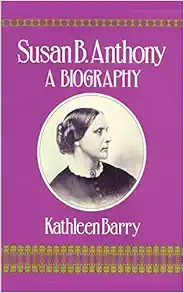 Susan B. Anthony
by
Barry, noted feminist sociologists and author of, Female sexual slavery, offers an enlightening biography of perhaps the most unconventional woman of her century. By drawing upon letters, diaries, and other documents, she integrates Anthony's personal story into the political, economic, and cultural milieu of 19th c. America. Annotation copyrighted by Book News, Inc., Portland, OR
Susan B. Anthony
by
Barry, noted feminist sociologists and author of, Female sexual slavery, offers an enlightening biography of perhaps the most unconventional woman of her century. By drawing upon letters, diaries, and other documents, she integrates Anthony's personal story into the political, economic, and cultural milieu of 19th c. America. Annotation copyrighted by Book News, Inc., Portland, OR
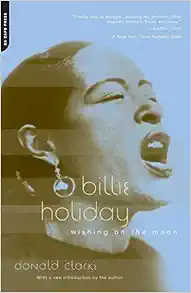 Wishing on the Moon
by
No singer has been more mythologized and more misunderstood than jazz legend Billie Holiday. This biography separates fact from fiction to reveal Lady Day in all stages of her short, tragic life.
Wishing on the Moon
by
No singer has been more mythologized and more misunderstood than jazz legend Billie Holiday. This biography separates fact from fiction to reveal Lady Day in all stages of her short, tragic life.
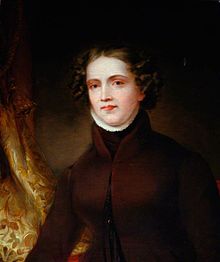
Dubbed as "the first modern lesbian," Anne Lister (1791-1840) was an English diarist from West Yorkshire, England. Her diary consist of details about her daily life and routine, as well as her relationships, financial struggles, opinions on local politics, and much more. Throughout the course of her life, her diary reached a length of five-millions words, expanding over twenty-six volumes and over three decades! Although her sexuality was no secret, some portions of her diary are encrypted in a code fabricated by her and Eliza Raine, one of her significant others. This code combined Greek lettering, punctuation, and mathematical and zodiac symbols. It was not deciphered until over a century after her death.
Use the Sex & Sexuality database to explore her diary!
Includes primary source materials like journals, memoirs, speeches, and more!
